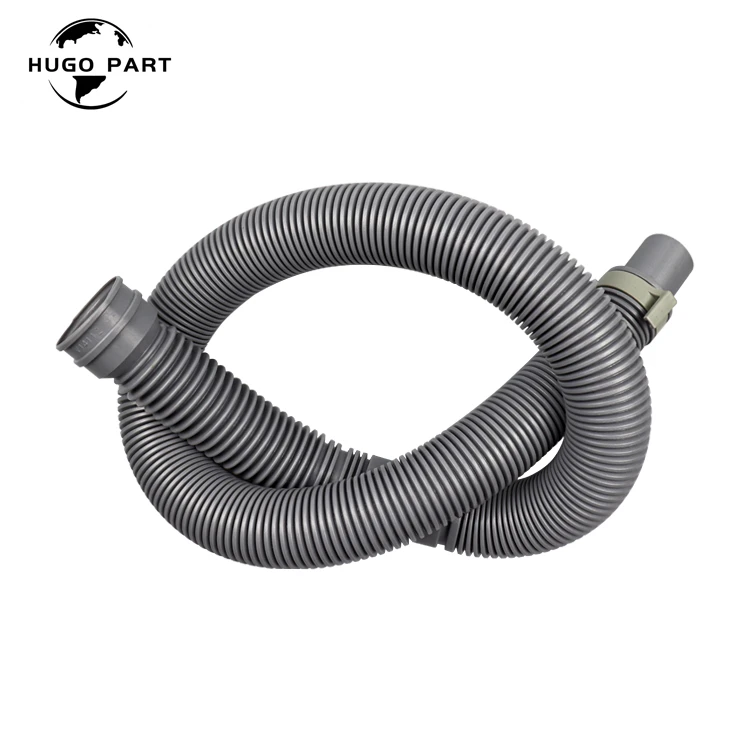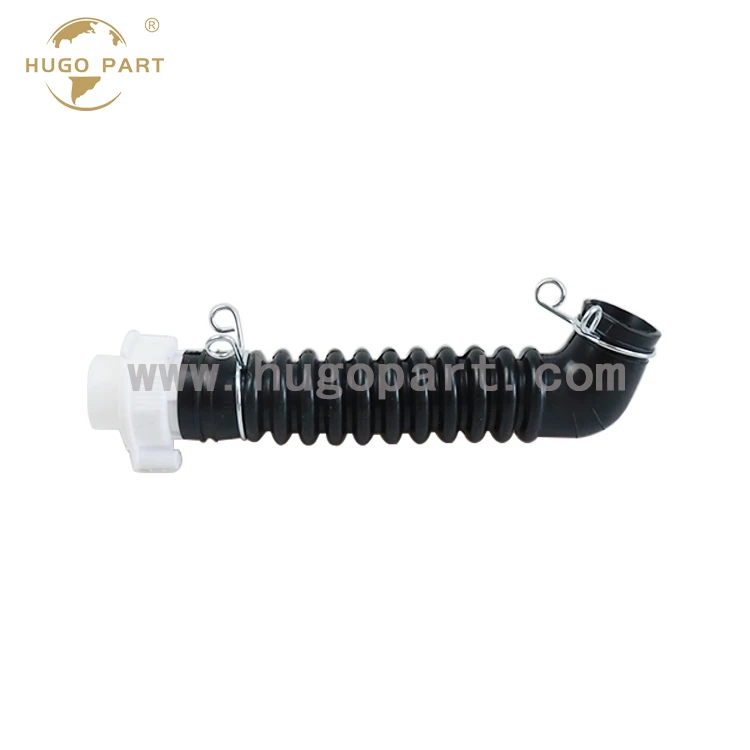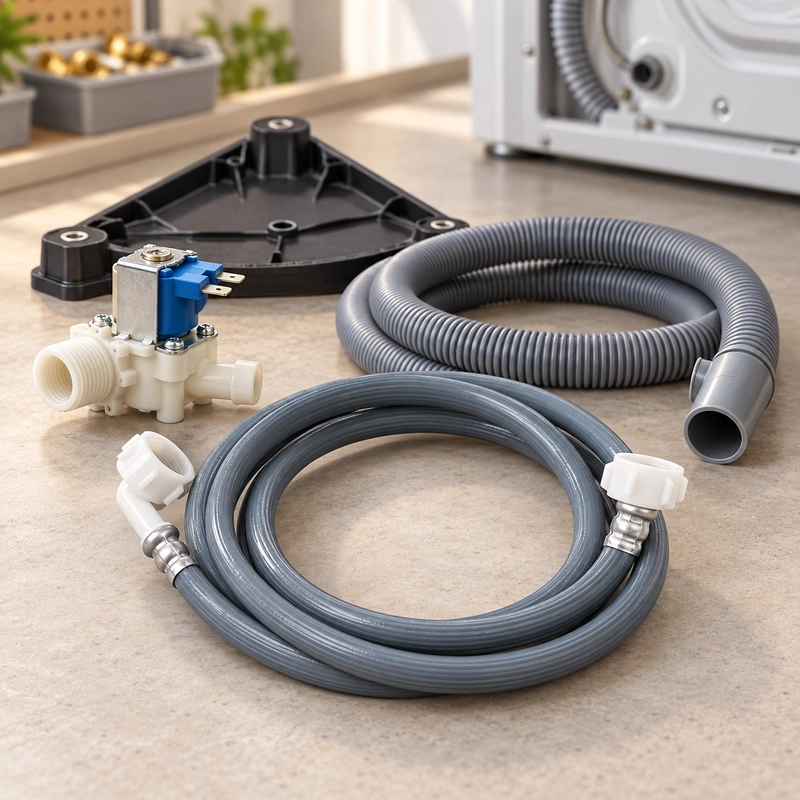
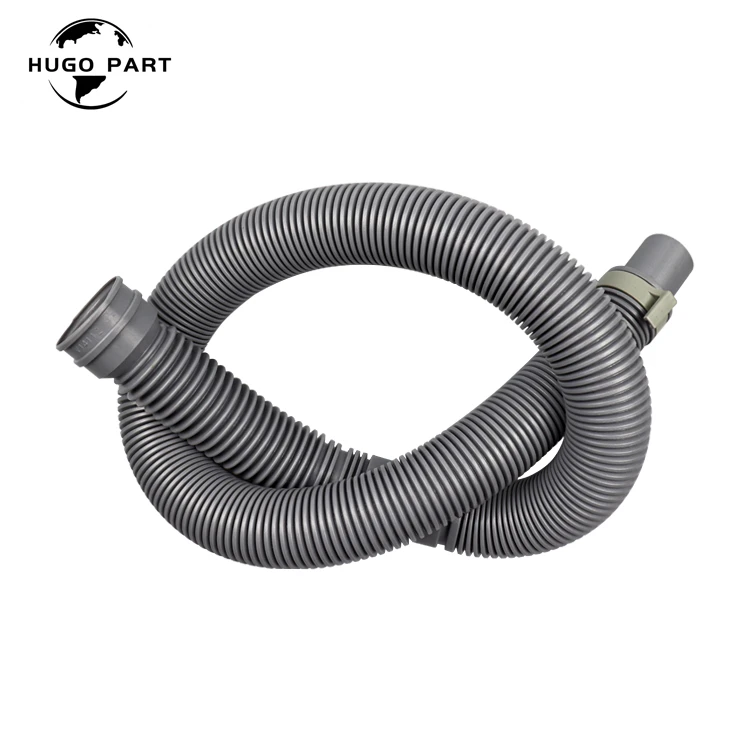
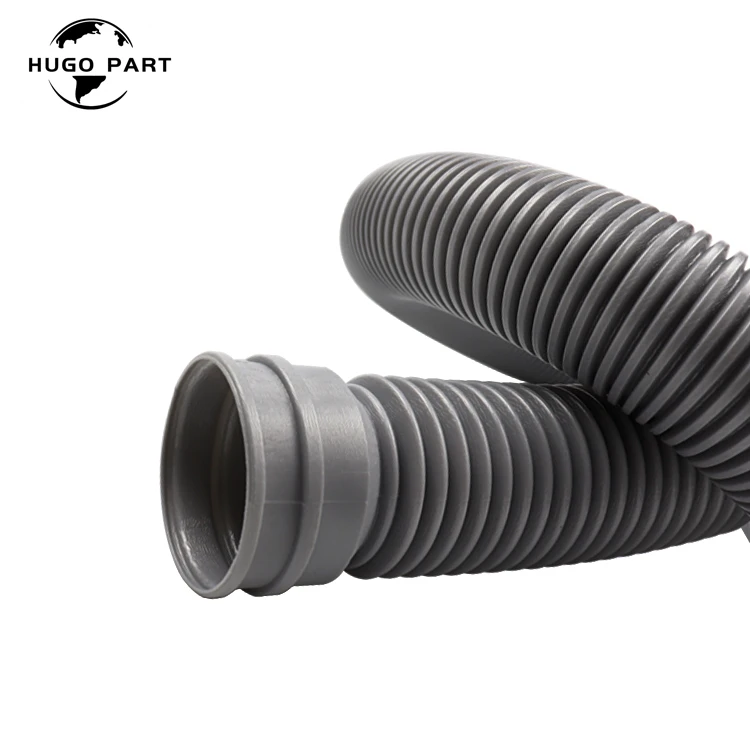
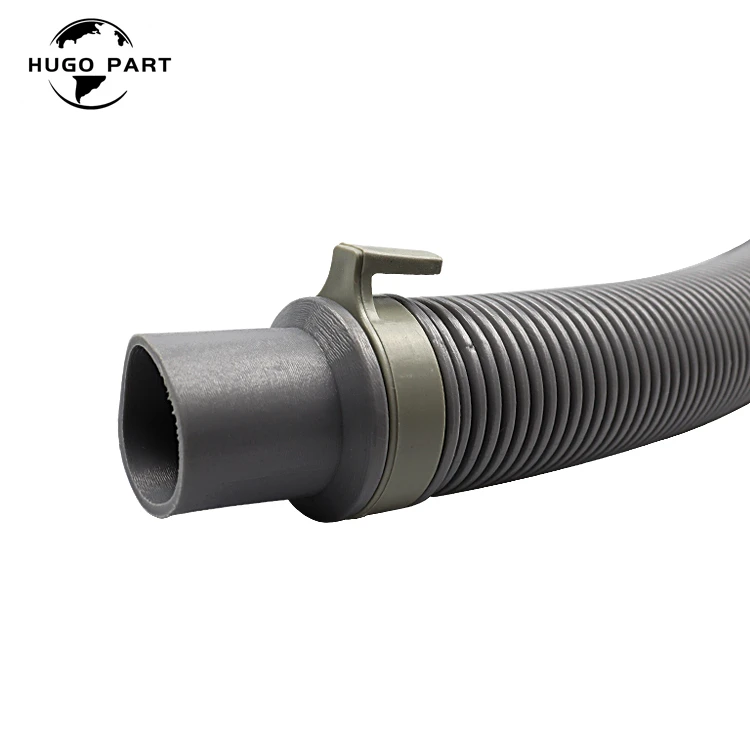
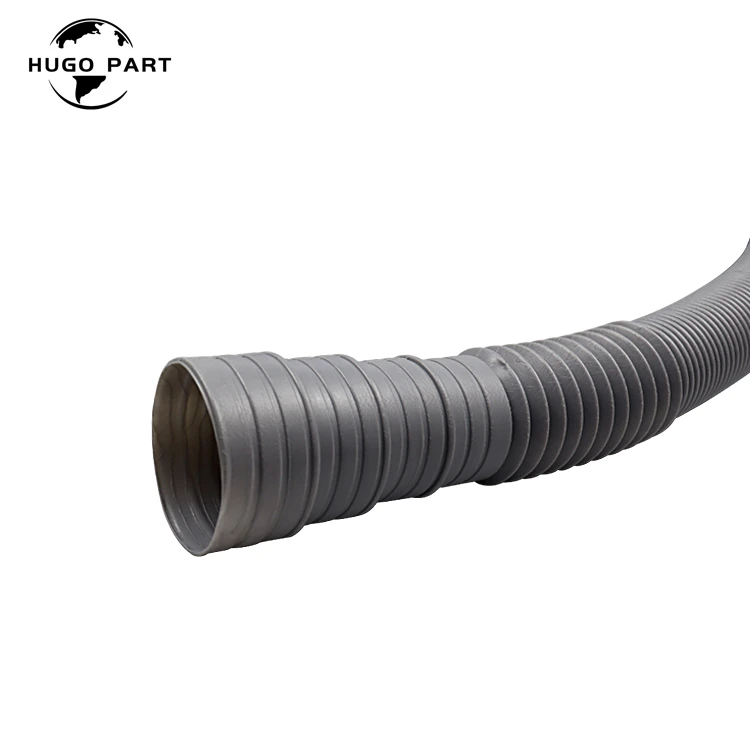
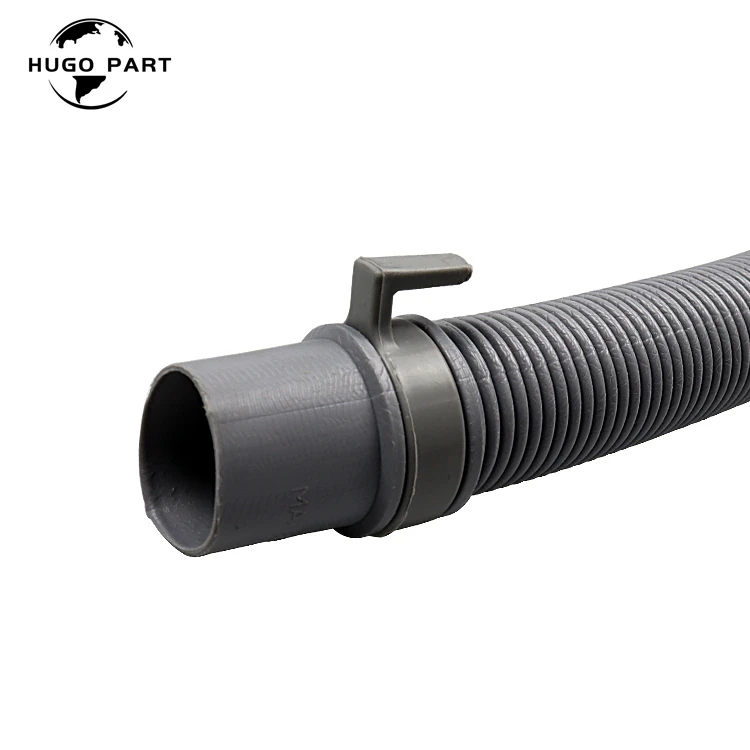
As a professional manufacturer, we are able to provide comprehensive customization services. Hugo high-quality 1-2m Washing Machine Drain Hose is widely used in residential and commercial laundry applications for reliable wastewater discharge. It is specifically designed to accommodate different installation layouts and drainage distances, ensuring seamless integration and efficient water flow. There is a corrugated design along the hose for enhanced flexibility, so that the hose can be easily routed around tight corners without kinking. No special tools are required to install the hose, and the standard diameter fits most washing machine drain outlets and standpipes. The biggest feature of this drain hose is its smooth inner wall, and its length is available in both 1-meter and 2-meter options to fit various machine-to-drain distances.
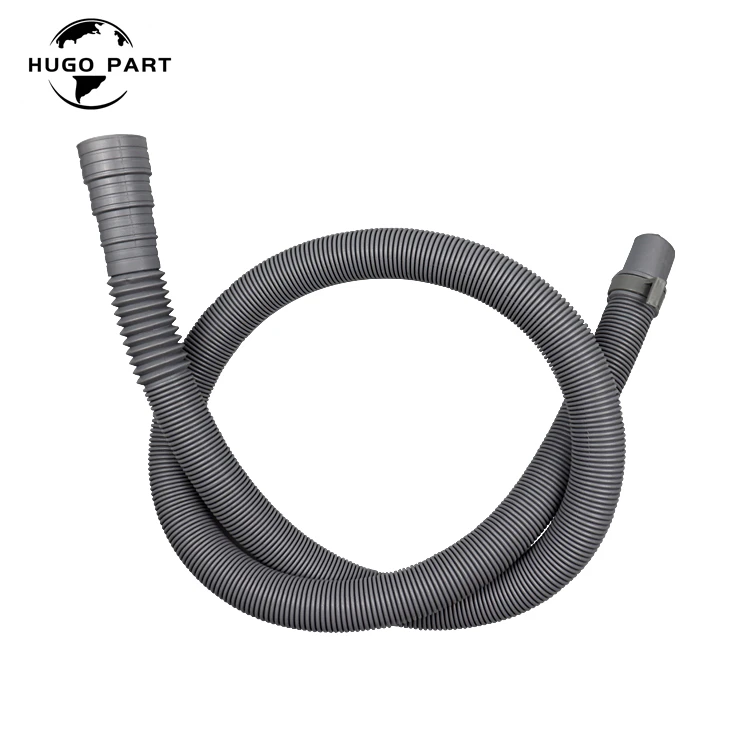
Choosing a drainage pipe may seem simple, but if the length, diameter, and material are not chosen correctly, it can be too light to install and too heavy to leak water onto the floor. Please confirm the selection according to the following steps:
Measure the actual distance from the washing machine drain to the floor drain or drainage riser. Choose a 1-meter specification for distances within 1 meter, and a 2-meter specification for distances between 1-2 meters. It is recommended to reserve a margin of 10-20 centimeters for easy adjustment of position during installation, to avoid insufficient length causing the drainage pipe to tighten and fall off. If the distance exceeds 2 meters, you can contact Hugo to customize extended specifications.
Check the outer diameter of the washing machine drain and the inner diameter of the drainage riser. The Hugo drainage pipe adopts a standard diameter and is suitable for the majority of household washing machine drainage outlets and drainage risers. If your drainage riser is thicker or thinner, you can use it with an adapter or contact Hugo to customize the appropriate diameter.
Hugo drainage pipes are made of high-quality materials that are soft and resistant to bending, and are not easily hardened or cracked in low temperature environments. The corrugated pipe body design is easy to bend and run, and the inner wall is smooth and not easily clogged with dirt.
One end of the drainage pipe is connected to the washing machine drain, and the other end is inserted into a floor drain or drainage riser. If fixing is required, use pipe clamps or zip ties to secure the drainage pipe to the wall or body to prevent it from swinging and falling off during drainage. Ensure that the bent part of the drainage pipe does not form a dead bend during installation, and maintain smooth drainage.
Professional tip: If the drainage pipe needs to pass through walls or floors, it is recommended to choose an extended specification and use it with a protective sheath to avoid pipe wear. After installation, the water test confirms smooth drainage and no leakage at the interface, so you can use it with confidence.
| Product name | 1-2m Washing Machine Drain Hose |
| Available specification | 1-2m |
| Available colors | Customization is available upon request |
| Samples available | Small quantity samples can be provided; specific details are negotiable |
| MOQ (Minimum Order Quantity) | Negotiable |
| Warranty time | Generally 1 year, except for special cases |
| Packing method | Carton packaging; specific details are negotiable |
| Place of origin | Ningbo, China |
Check the overall appearance of the drainage pipe every two to three months for cracks, aging, hardening, wear, or bending deformation. Focus on inspecting the interfaces at both ends. If aging sealing rings, loose interfaces, or damaged pipe walls are found, replace them in a timely manner to avoid water leakage on the floor.
Regularly inspect the drainage pipes for dead bends, flattening, or being squeezed by heavy objects to ensure smooth and unobstructed bending of the pipes. If slow drainage is found, the drainage pipe can be removed from the washing machine end, and the inner wall of the pipe can be rinsed with clean water to remove attached fibers, hair, and other debris.
The interface at both ends of the drainage pipe is prone to accumulation of fluff and debris. Check it after cleaning the washing machine. If there are debris piled up at the interface, wipe it clean with a damp cloth. It is recommended to install a filter screen at the drainage outlet of the washing machine to reduce the entry of debris into the drainage pipe from the source.
If the drainage pipe is installed in areas with direct sunlight such as balconies and window edges, it is recommended to fix it with zip ties and cover it with a shading sleeve, or directly replace it with a dark colored drainage pipe to reduce the accelerated aging of the pipe caused by ultraviolet radiation and extend its service life.
In cold regions during winter, if drainage pipes are installed outdoors or on well ventilated balconies, there may be residual water in the pipes after drainage, which can cause the pipe walls to crack due to expansion after freezing. After winter use, it is recommended to drain the remaining water in the pipe or install insulation cotton wrapped protection on the drainage pipe.
If any of the following situations are found in the drainage pipe, please replace it in a timely manner: obvious cracks or damages on the pipe wall, hardening and brittleness of the material, repeated water leakage at the interface, and severe fouling on the inner wall that is difficult to clean. When replacing, use Hugo original drainage pipes with standard diameter for easy installation.
Measure the actual distance from the washing machine drain to the floor drain or drainage riser first. Choose a 1-meter specification for distances within 1 meter, and a 2-meter specification for distances between 1-2 meters. It is recommended to reserve a margin of 10-20 centimeters for easy adjustment of position during installation, to avoid insufficient length causing the drainage pipe to tighten and fall off. If the distance exceeds 2 meters, you can contact Hugo to customize extended specifications.
Hugo drainage pipes are made of high-quality materials and added with cold resistant plasticizers, which can maintain softness in low temperature environments and are not prone to hardening and cracking. Under normal indoor usage conditions, the lifespan can exceed 5 years.
The inner wall of the Hugo drainage pipe is smooth, the water flow is smooth, and it is not easy to get dirty. However, after long-term use, clothing fibers, hair, coins and other debris may enter the drainage pipe with water flow and cause blockage. It is recommended to install a filter screen at the drainage outlet of the washing machine and clean it regularly. If it is blocked, the drainage pipe can be removed from the end of the washing machine and rinsed with a long handled brush or clean water to clear it.
There are usually several reasons for interface leakage: firstly, the interface is not inserted properly. Simply re insert it and confirm that the sealing ring is in place; Secondly, if the diameter of the drainage pipe does not match that of the drainage riser, an adapter or sealing ring can be installed; The third issue is the formation of a dead bend at the bend of the drainage pipe, which leads to poor drainage and water overflowing from the interface. Adjust the direction of the pipeline to ensure smooth bending. If the above reasons are ruled out and the water still leaks, please contact Hugo customer service for assistance in troubleshooting.
The Hugo drainage pipe adopts a standard diameter and is suitable for the vast majority of household fully automatic pulsator washing machines, drum washing machines, and semi-automatic dual cylinder washing machines. During installation, connect one end to the washing machine drain and insert the other end into the floor drain or drainage pipe. If the diameter of your washing machine drain is special, it can be used with an adapter or contact Hugo to confirm compatibility.
Address
Dongshantou Industrial Park, Guanhaiwei Town, Cixi City, Ningbo Province, Zhejiang Province, China