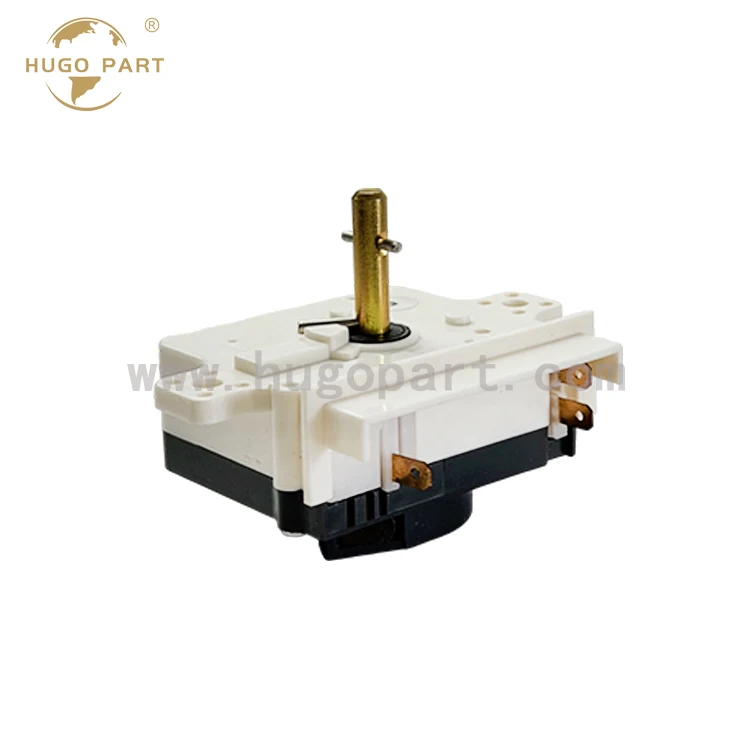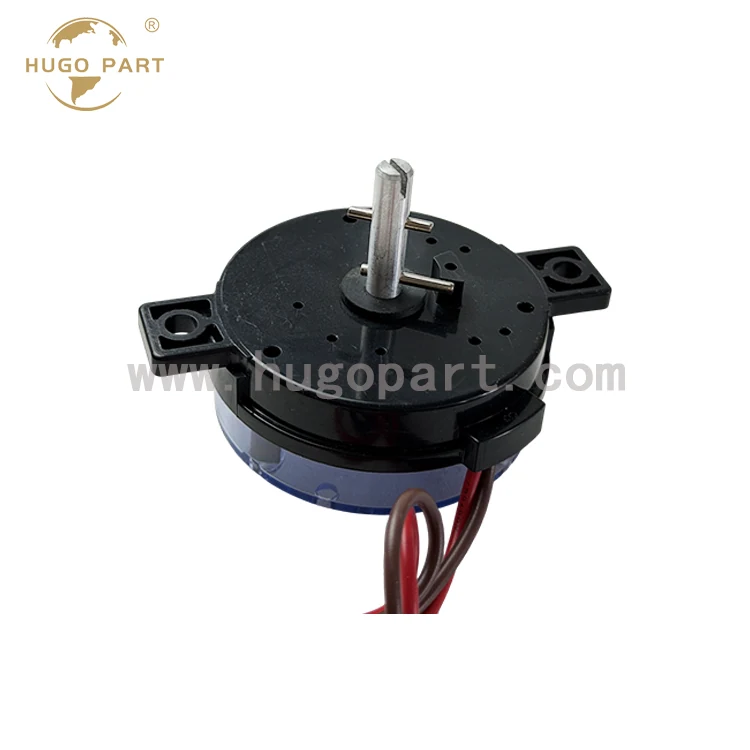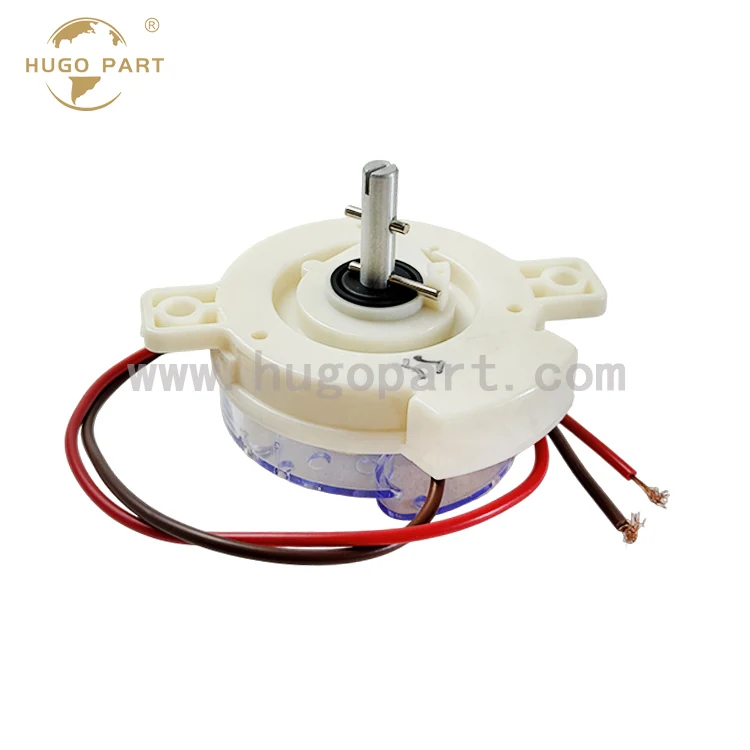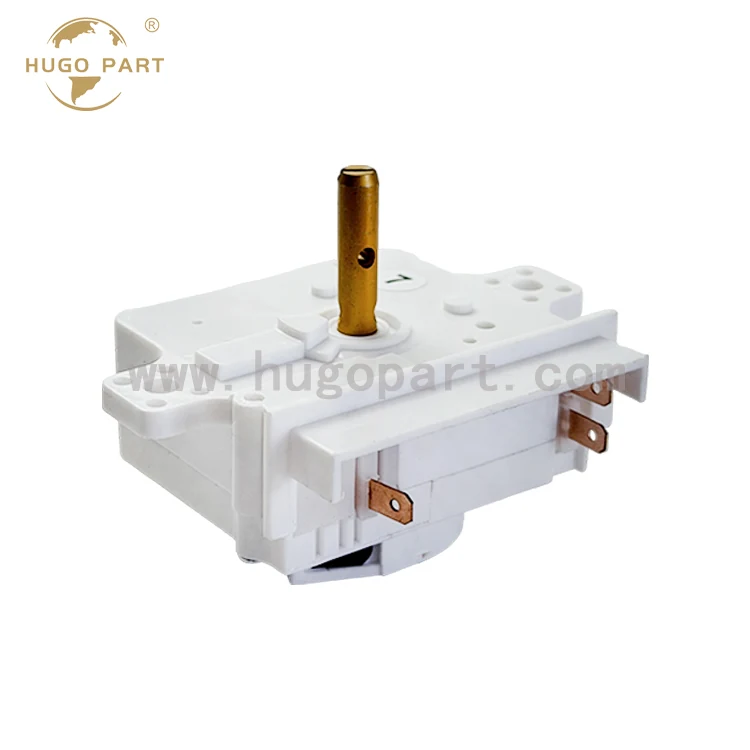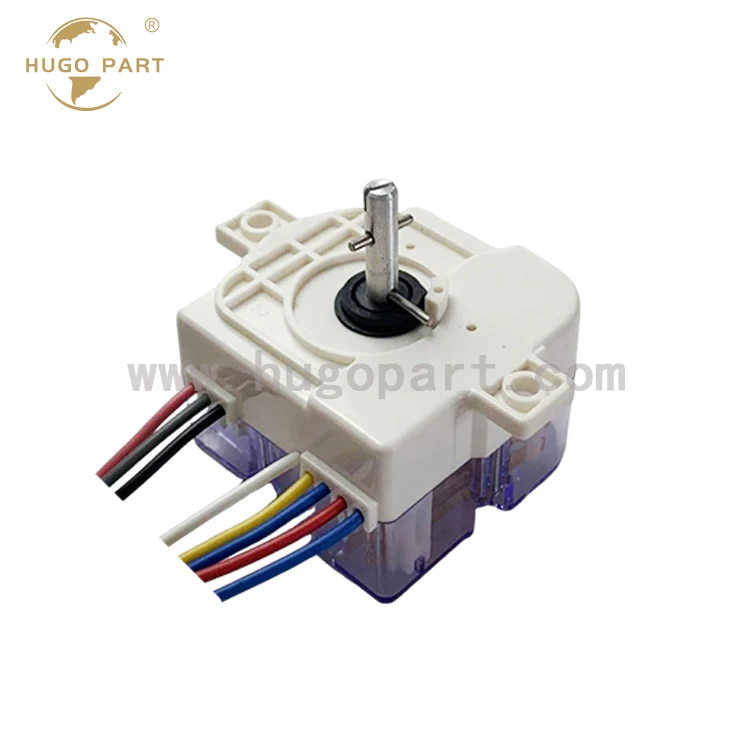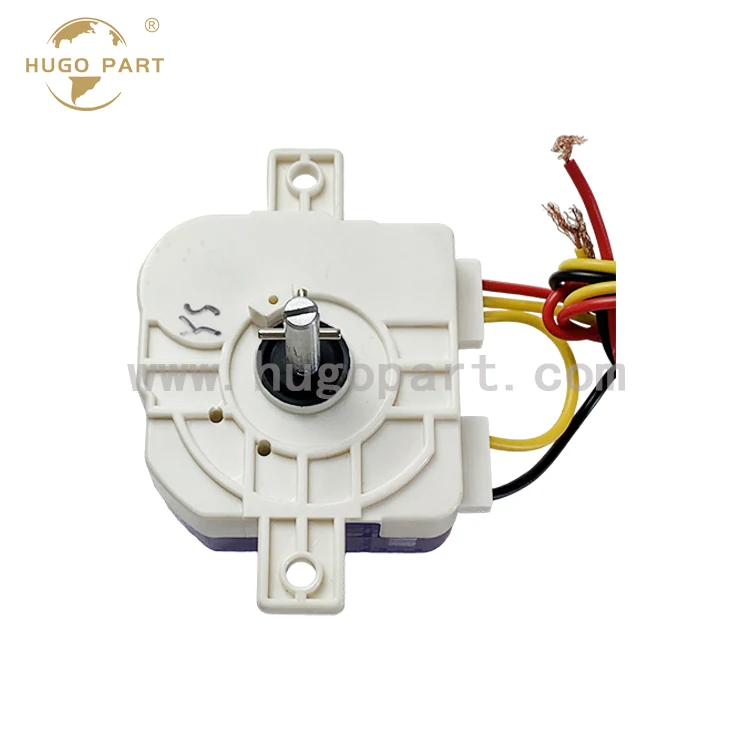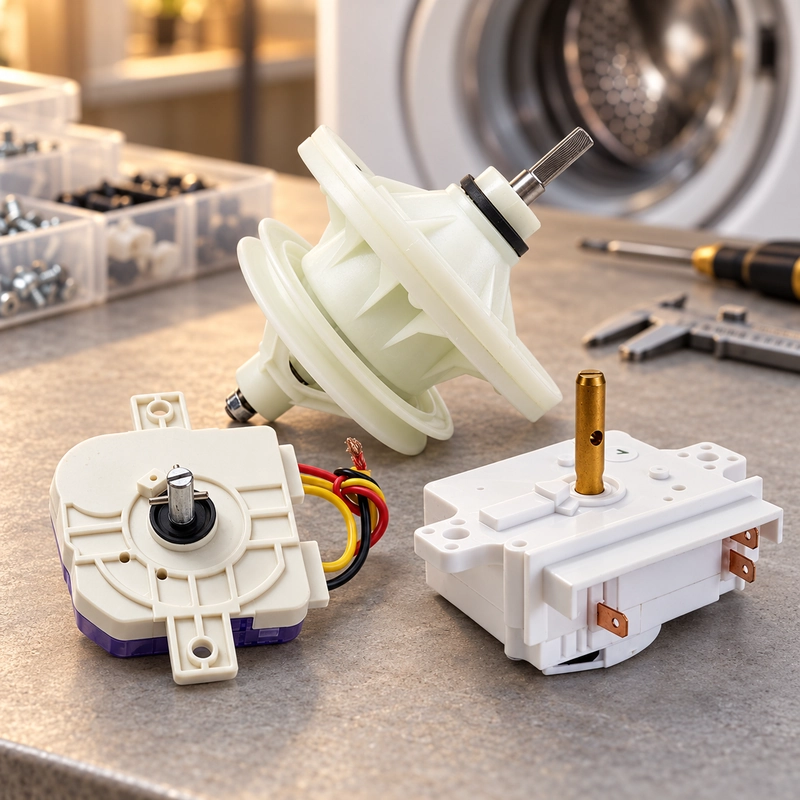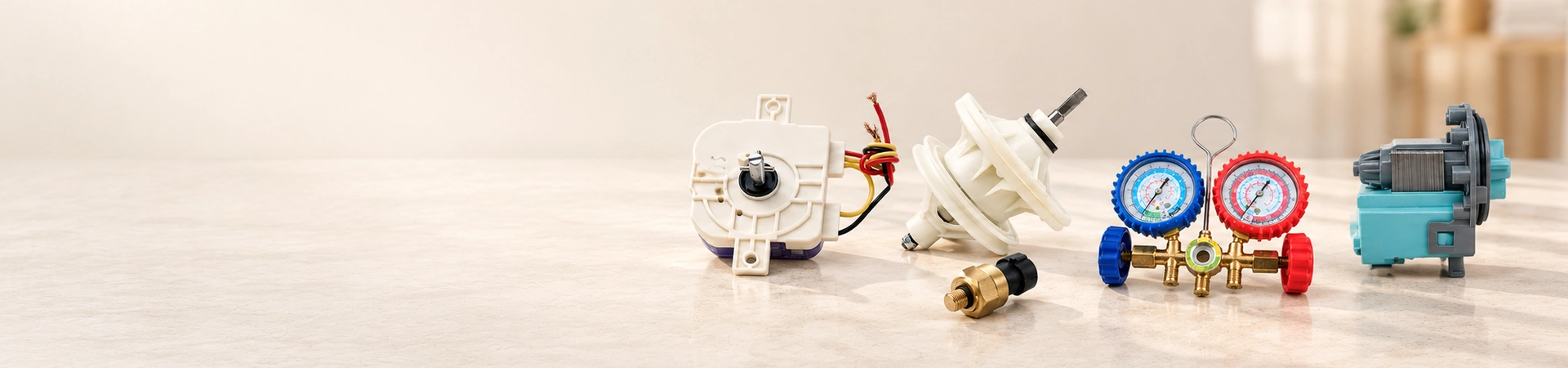
Hugo is a manufacturer and supplier of washing machine timers in China, offering a variety of styles mainly used for semi-automatic washing machines. Washing Machine Timers support customized colors, and the color scheme of the shell can be changed according to customer requirements. Letters, brand logos, and model information can also be printed on the casing, which makes identification easier for maintenance channels and for the manufacturer of the complete machine. Hugo supplies these timers to repair markets and assembly lines that need consistent parts across repeat orders.
It is the core component that controls the water inlet, washing, drainage, and dehydration programs of the washing machine and advances them in a timely sequence. In practical terms, it is the "time commander" of the entire machine: every stage depends on the timer switching the right circuit at the right moment.
Mechanical timers rely on gear sets and cam switching contacts, with a simple structure and strong anti-interference ability. Electronic timers use chips for timing, making the program more flexible and accurate. Both types have their own applicable scenarios, and the original machine type needs to be confirmed before selection. A timer that suits one machine type will not necessarily suit another, which is why we confirm the original configuration before quoting.
Timer failures rarely come from the shell. They come from the contact and the gear train. Our design decisions start there.
These two points are what separate a timer that lasts through frequent use from one that develops timing errors within months. When sourcing washing machine timer spare parts, the contact material and gear precision are the first specifications worth checking.
Beyond the contact and gear set, three structural details affect how a timer behaves after months in service.
For technicians replacing washing machine timer parts in coastal or high-humidity regions, the terminal coating and shell material matter as much as the timing mechanism itself.
Each timer undergoes a travel time test and a continuity test before leaving the factory, and is only released if it passes the test. No unit is shipped on a sampling basis for these two checks.
This is the practical reason our timers hold their timing in daily use. The test is not a formality; it is the last point where a faulty unit can be stopped before it reaches a repair job.
Color customization and letter printing are not cosmetic extras. For maintenance channels, a printed brand logo or model number on the casing reduces mis-identification during repair. For the manufacturer of the complete machine, a matching color scheme keeps the timer consistent with the appliance design.
We support customized shell colors, letter printing, brand logos, and model information printing. For wholesale washing machine timer orders, this means one part number can be visually distinguished from another without opening the package.
Customization is only useful if the delivery date holds. Our timer orders support color customization and letter printing with stable delivery time, which matters for repair stations restocking regularly and for assembly lines planning production runs. Standard styles are supplied from stock where available, and customized orders follow a confirmed lead time at the time of order.
A mechanical timer relies on gear sets and cam switching contacts, with a simple structure and strong anti-interference ability. An electronic timer uses a chip for timing, making the program more flexible and accurate. The original machine type needs to be confirmed before selection.
Confirm the original machine type, the timer type (mechanical or electronic), and the wiring configuration before ordering. The contact material and gear precision are the two specifications that most affect long-term timing accuracy.
The shaft core is reinforced with a structure designed to prevent the knob from loosening after long-term use, which addresses a common failure reported in repair work.
Yes. The shell is flame-retardant and the wiring terminal coating is oxidation-resistant, which suits humid environments where unprotected terminals would otherwise corrode.
Each timer undergoes a travel time test and a continuity test before leaving the factory, and is only released if it passes. Units are not released on a sampling basis for these two checks.
Yes. Customized shell colors are supported, and letters, brand logos, and model information can be printed on the casing for identification by maintenance channels and complete machine manufacturers.