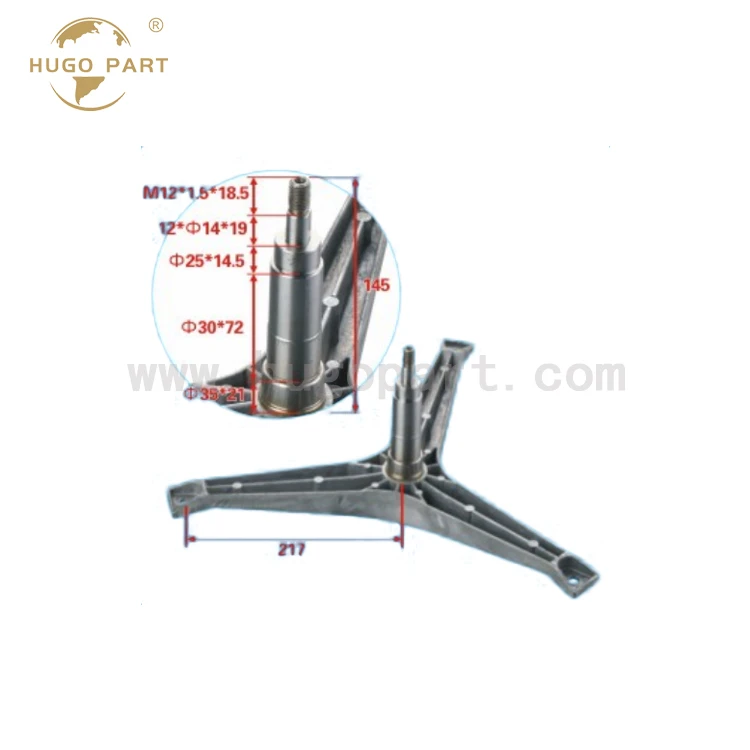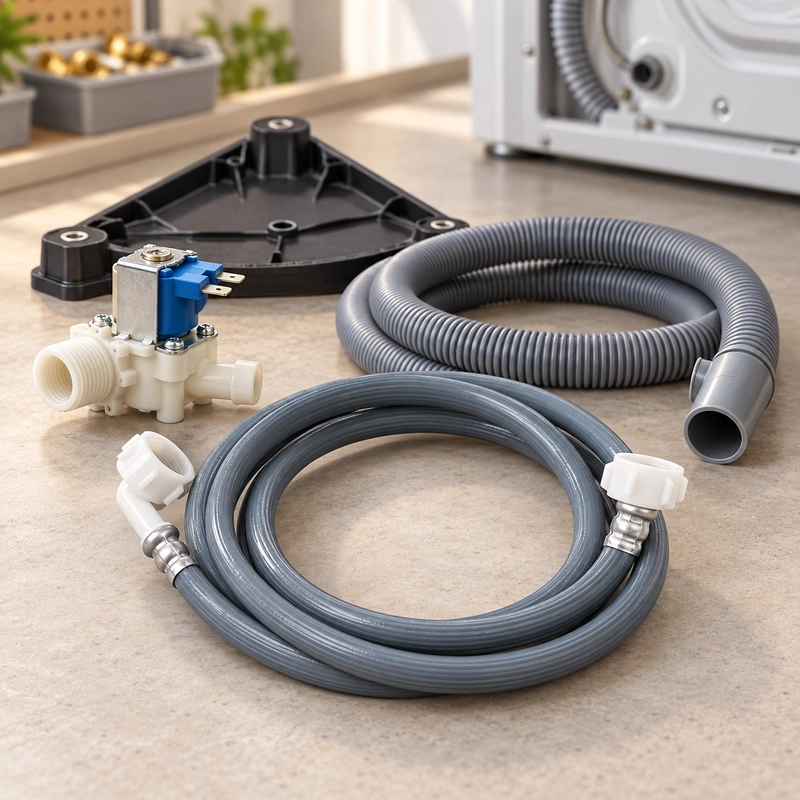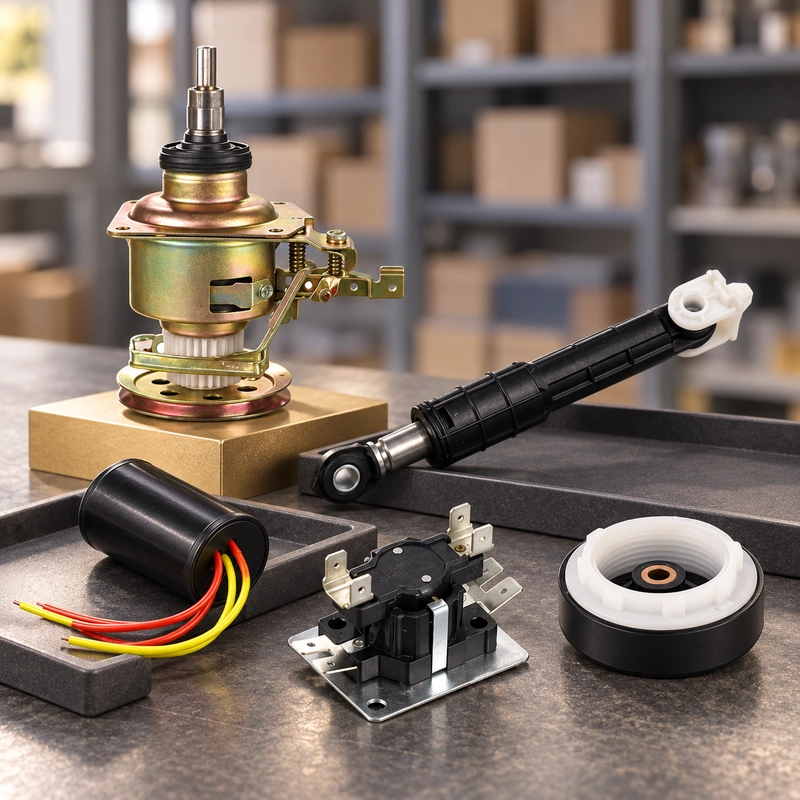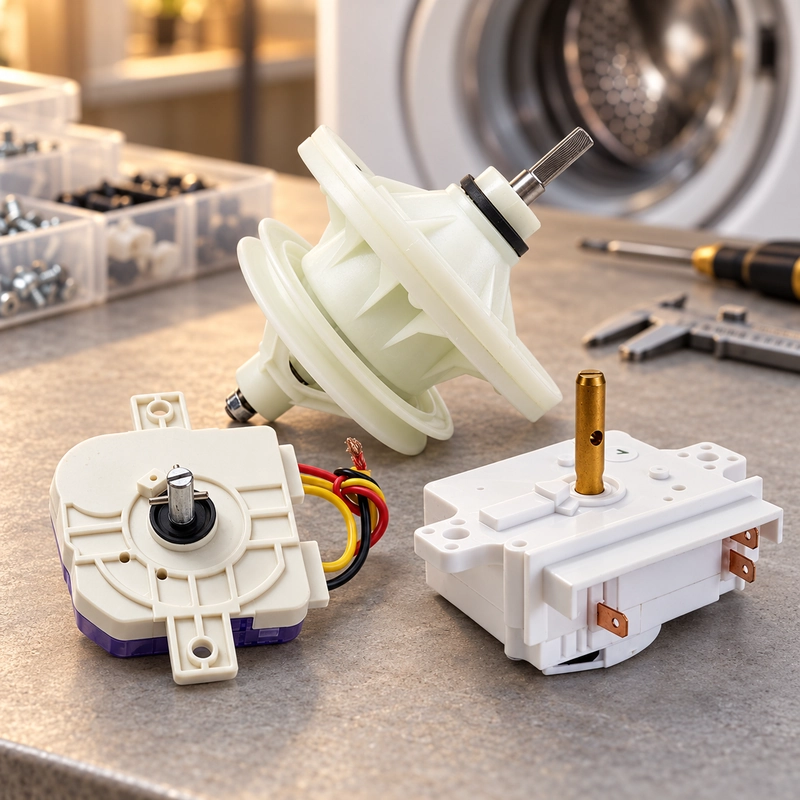
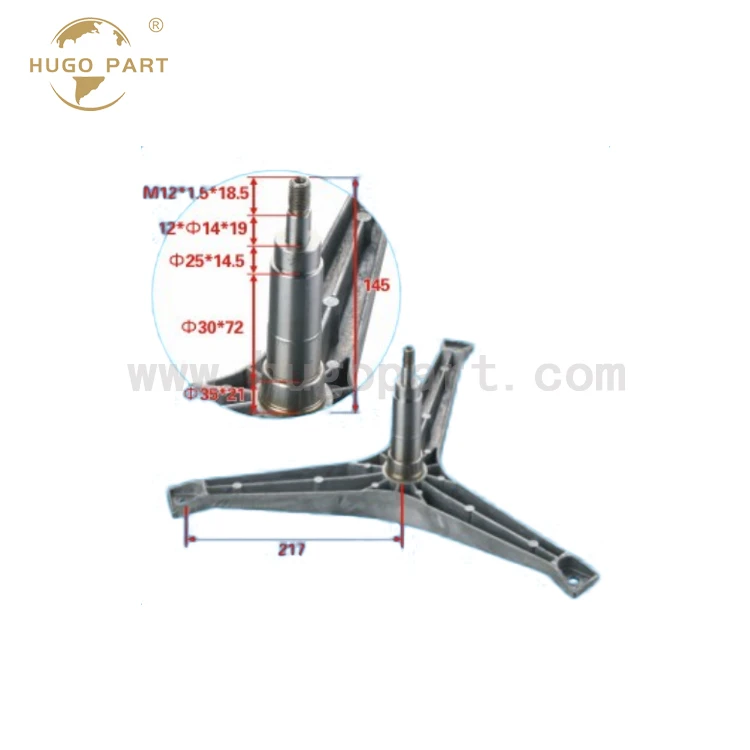
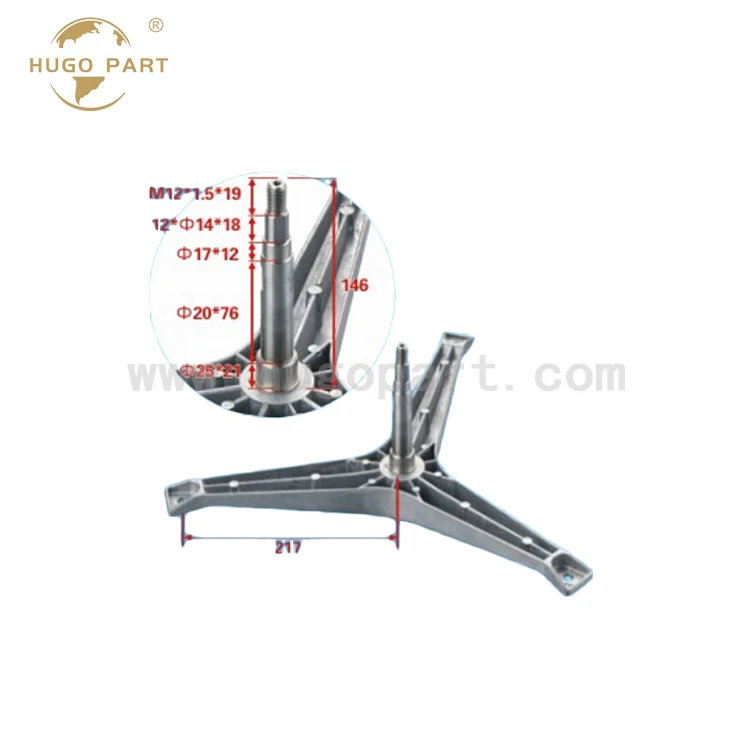
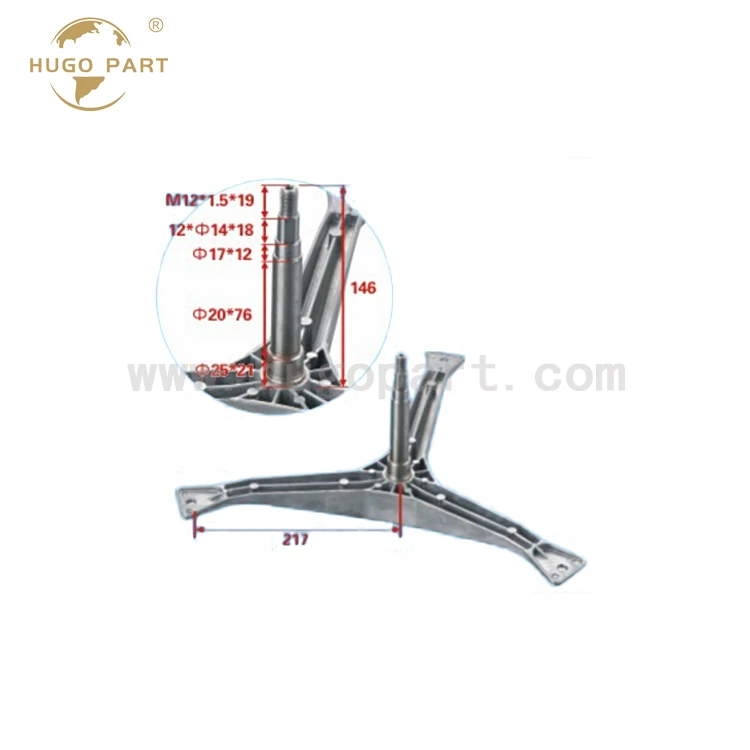
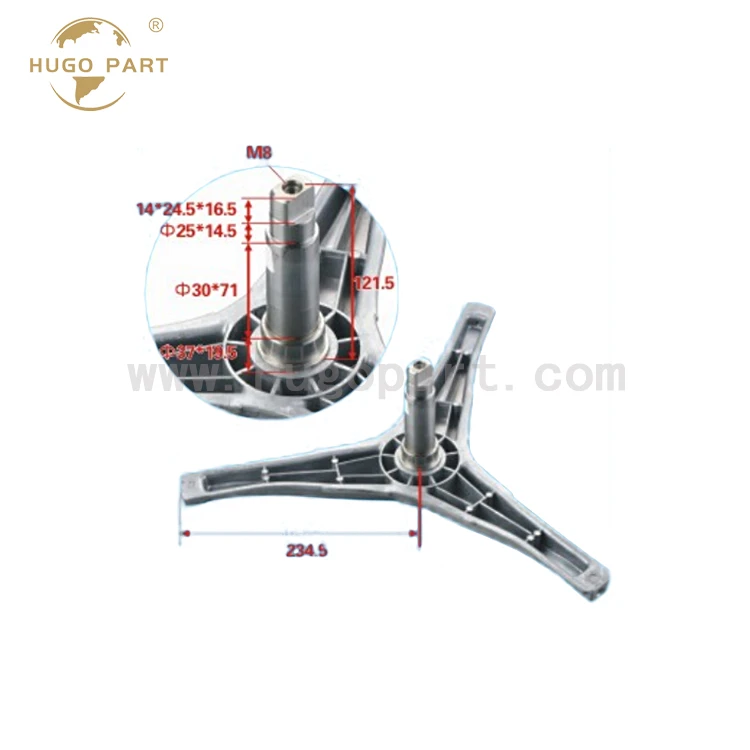
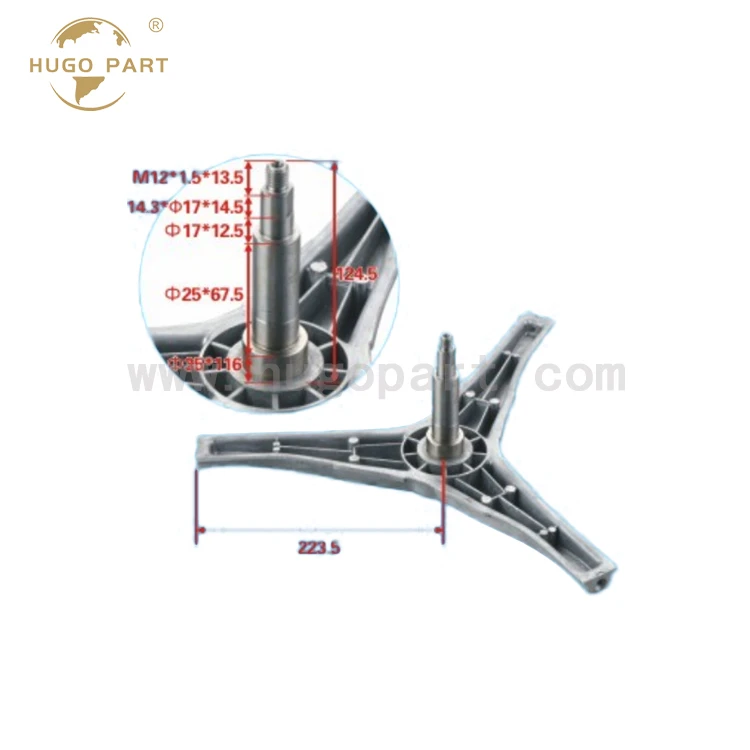
As a professional manufacturer, we are able to provide comprehensive customization services. The Hugo 20cm and above triangular washing machine base is widely used in compact and standard semi-automatic double bucket washing machines for structural support and vibration control. It is specifically designed to accommodate machines with a base diameter of 20cm or more, ensuring seamless integration with the gearbox, motor, and bucket components. There is a triangular geometric shape on the chassis for stable load distribution, so that the weight of the washing bucket and motor can be evenly distributed on three key support points to minimize vibration during the rotation cycle.
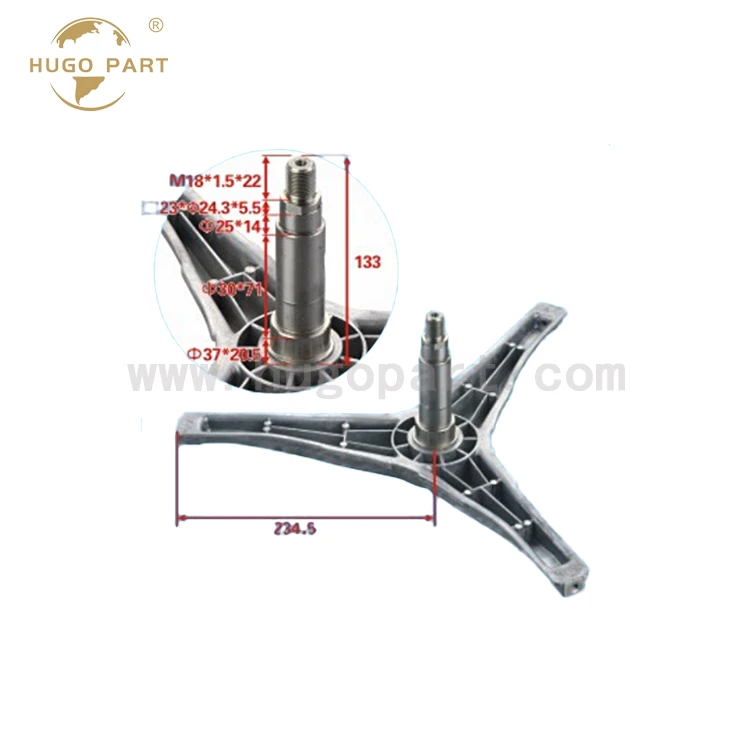
The chassis of the washing machine base is a core structural component at the bottom of the washing machine body, equivalent to the "skeleton base" of the washing machine. It is located at the bottom of the entire machine, carrying the entire weight of the main components such as the washing bucket, motor, and reducer, and firmly fixing these components to the body frame.
If the washing machine experiences the following situations, the base chassis may need to be replaced: significant shaking during operation, abnormal metal friction or impact sounds, obvious tilting or sinking of the washing bucket, cracks or damage marks on the bottom of the machine body. Long term use of the chassis in humid environments may also lead to corrosion, aging, and brittleness. Regular inspections can detect potential hazards in advance.
The Hugo 20cm and above triangular base chassis is designed specifically for compact and standard semi-automatic dual cylinder washing machines. The triangular geometric structure evenly distributes weight to three support points, ensuring stable structure and precise installation, making it an ideal choice for maintenance and replacement.
| Product name | 20cm and Above Triangular Washing Machine Base |
| Available specification | 20cm triangle |
| Available colors | Customization is available upon request |
| Samples available | Small quantity samples can be provided; specific details are negotiable |
| MOQ (Minimum Order Quantity) | Negotiable |
| Warranty time | Generally 1 year, except for special cases |
| Packing method | Carton packaging; specific details are negotiable |
| Place of origin | Ningbo, China |
Although the chassis is made of corrosion-resistant engineering plastics, long-term exposure to humid and poorly ventilated environments can accelerate aging. Try to place the washing machine in a dry and ventilated location to avoid long-term soaking of the bottom in balcony water. After each laundry, you can slightly open the door or ventilate the bottom to reduce the accumulation of moisture.
Check the chassis and bottom of the machine every 2-3 months to remove hair, loose threads, soap stains, and dust. You can use a soft bristled brush or a damp cloth to wipe, focusing on cleaning the gaps at the triangular support to prevent debris from accumulating and causing poor drainage or mold growth.
When cleaning, only use neutral cleaning agents or clean water. Do not rinse the chassis directly with strong acids, alkalis, or bleach, and do not come into contact with gasoline or organic solvents to prevent engineering plastics from becoming brittle, discolored, or cracking on the surface.
Check the chassis fixing screws for looseness every six months. Loosening can cause abnormal shaking and uneven triangular force during dehydration. Tighten moderately in diagonal order, do not use excessive force to prevent screw holes from slipping or chassis deformation.
Avoid prolonged direct sunlight and proximity to heat sources such as water heaters and heaters. Ultraviolet radiation and sustained high temperatures can cause plastic chassis to age and become brittle, shortening their service life.
If the shaking of the machine body increases, there is friction sound at the bottom, cracks or obvious discoloration and brittleness appear at the triangular support points during operation, it indicates that the chassis is fatigued. The machine should be stopped in time for inspection and replacement of the original Hugo chassis to avoid damage to the motor and reducer.
Why choose us
Hugo has been deeply involved in the field of washing machine accessories for many years, with a product line covering core components such as timers, reducers, motors, pulsars, inlet valves, drainage pipes, and base chassis. The specifications are complete, and one-stop procurement saves the trouble of multiple inquiries.
From raw material procurement to production and shipment, every process is strictly controlled. Each product undergoes multiple tests and full inspections before leaving the factory to ensure stable and reliable quality. We are well aware of the impact of parts repairs on the reputation of repair shops and wholesalers, so we prioritize quality.
We provide free selection service, and our technical team will respond within 30 minutes. Based on your washing machine brand, model, or old part photos, we will accurately match the specifications to avoid the trouble of buying the wrong one, not fitting it, and returning or exchanging goods.
Familiar with foreign trade processes, with dedicated personnel coordinating every step from quotation, sampling, production, inspection to shipment. Smooth English communication, real-time response on WhatsApp/WeChat, timely synchronization of order progress, allowing overseas customers to rest assured and worry free.
12-month warranty, response within 48 hours. We not only sell products, but also hope to become your long-term trusted partner.
The 20cm and Above Triangular Washing Machine Base adopts three support points to evenly distribute weight, suitable for compact and standard semi-automatic dual cylinder washing machines of 20cm and above, with a lightweight structure and flexible installation. The hexagonal chassis adopts six support points, with stronger structural rigidity, suitable for large capacity models of 29cm and above, and more stable operation under heavy loads. When making a purchase, the original chassis shape and size should be taken as the standard. Remove the old parts, measure the diameter, confirm the shape, and match the corresponding specifications.
Chassis damage usually manifests as: significantly increased shaking during washing machine operation, abnormal metal friction or impact sounds, obvious tilting or sinking of the washing bucket, cracks or damage marks on the bottom of the machine body. If not replaced in a timely manner, vibration will be transmitted to other components, causing wear and tear on acceleration motors, reducers, belts, and other components. In severe cases, it may lead to component detachment or damage to the body structure, resulting in higher repair costs.
Installation requires disassembling the bottom shell of the washing machine, which involves the dismantling and resetting of the motor, reducer, and belt. It is recommended to have a professional repairman operate it. The Hugo chassis is formed using precision molds, and the installation holes and fixing points are strictly aligned with the original machine structure. The technician can reinstall it according to the original position, and it usually takes 30-60 minutes to complete the replacement. If you have disassembly experience, you can also replace it yourself, but please pay attention to reinstalling each component in its original position and locking the screws.
Hugo chassis is made of high-strength engineering plastics and added with anti-corrosion and anti-aging additives, which will not rust. It is not easy to crack or deform after long-term use in humid and detergent residual environments. Compared to metal chassis, engineering plastic chassis is lighter in weight, has better shock absorption effect, and does not have corrosion problems.
Address
Dongshantou Industrial Park, Guanhaiwei Town, Cixi City, Ningbo Province, Zhejiang Province, China