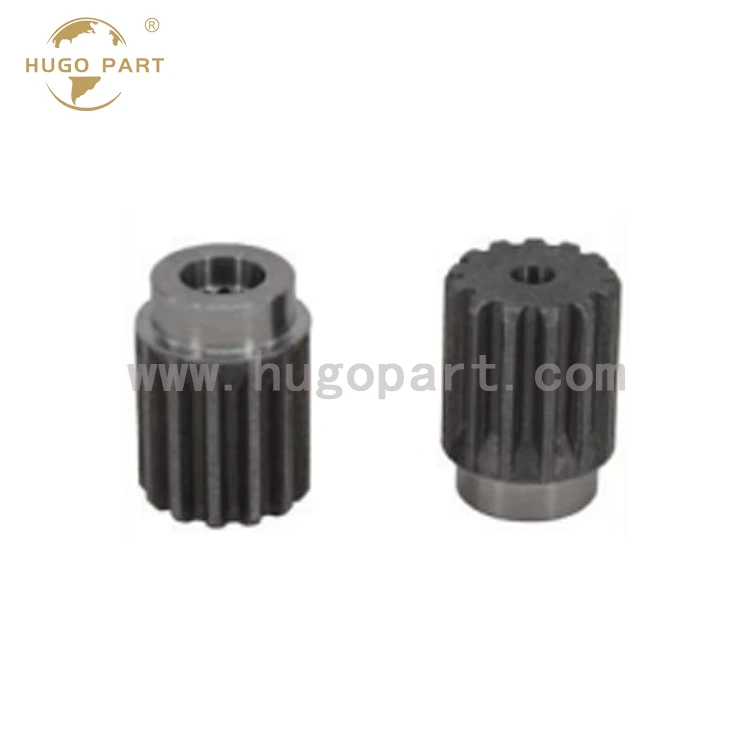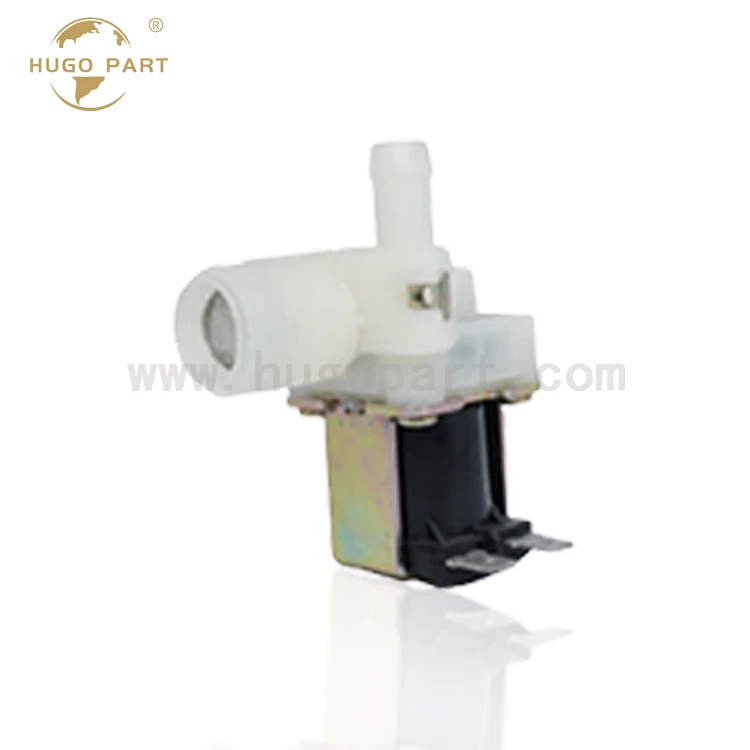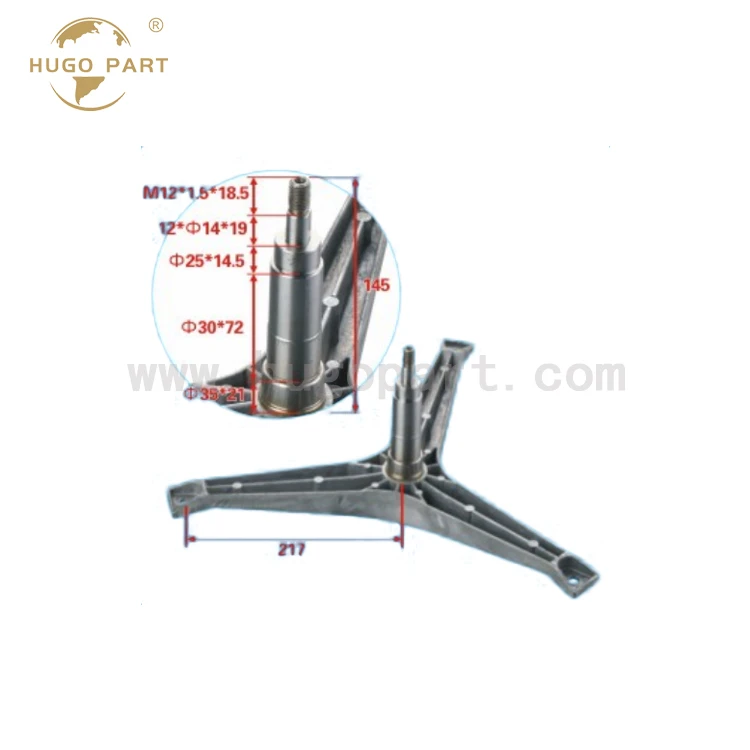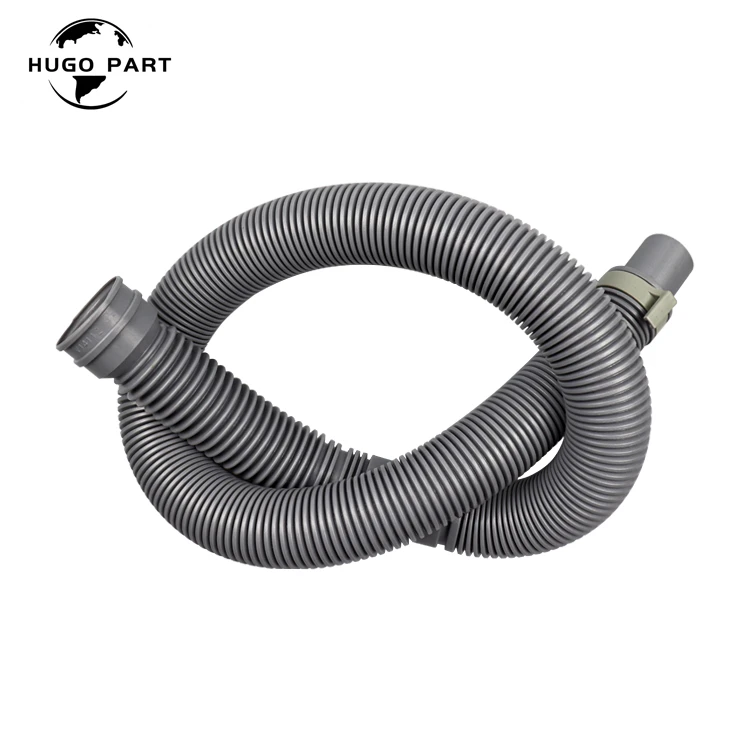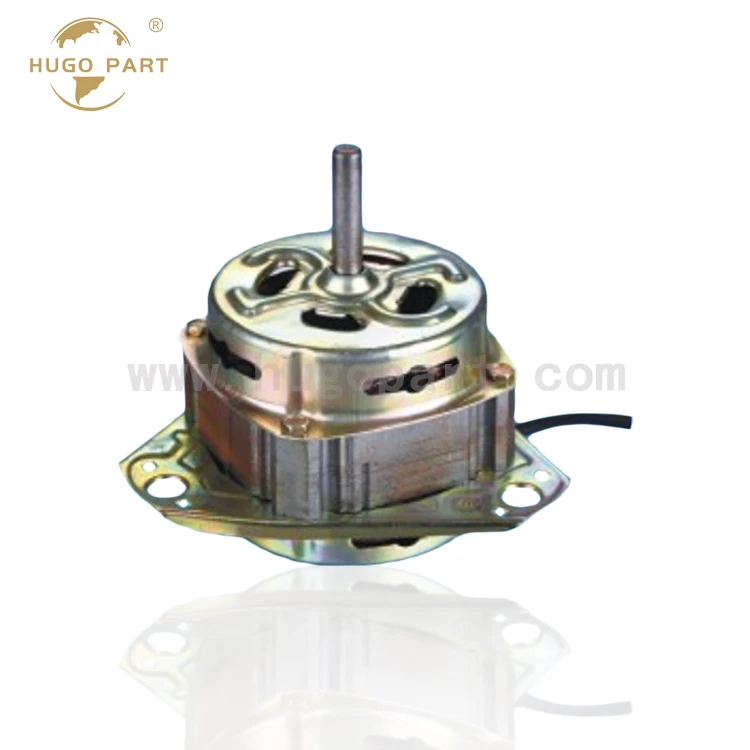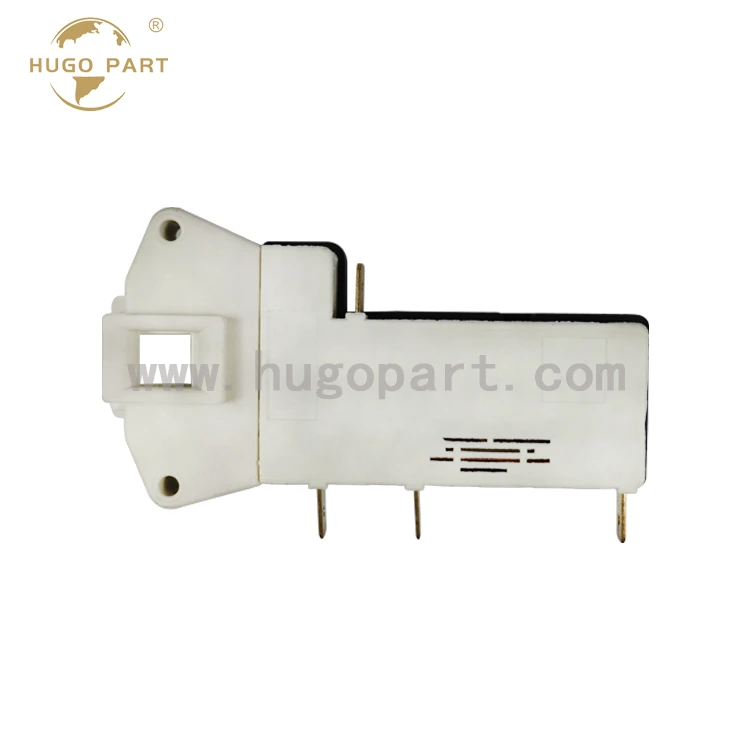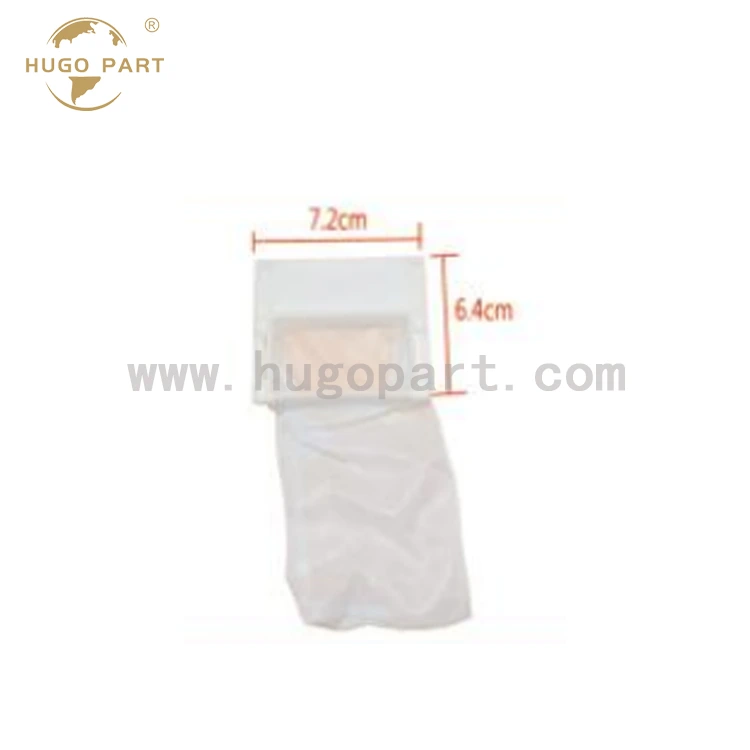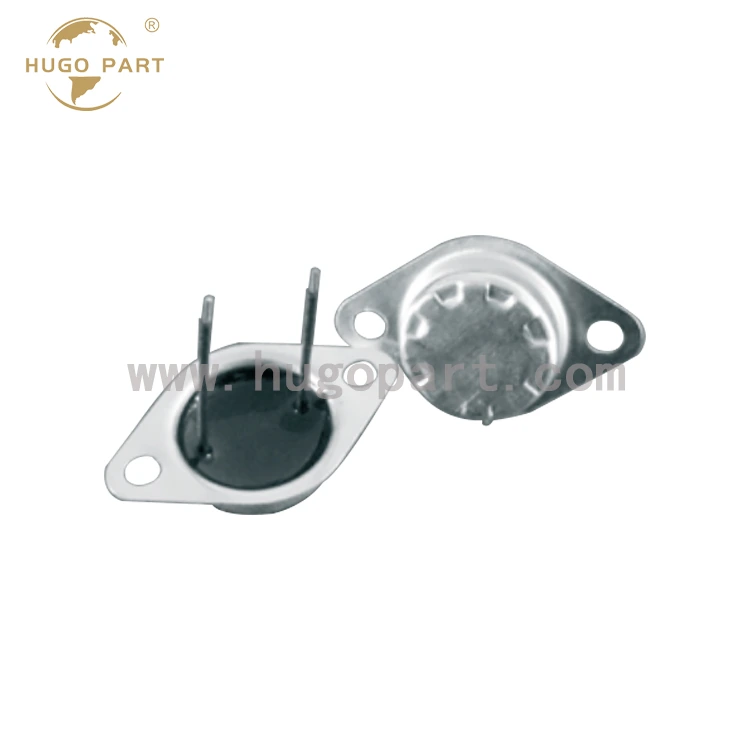
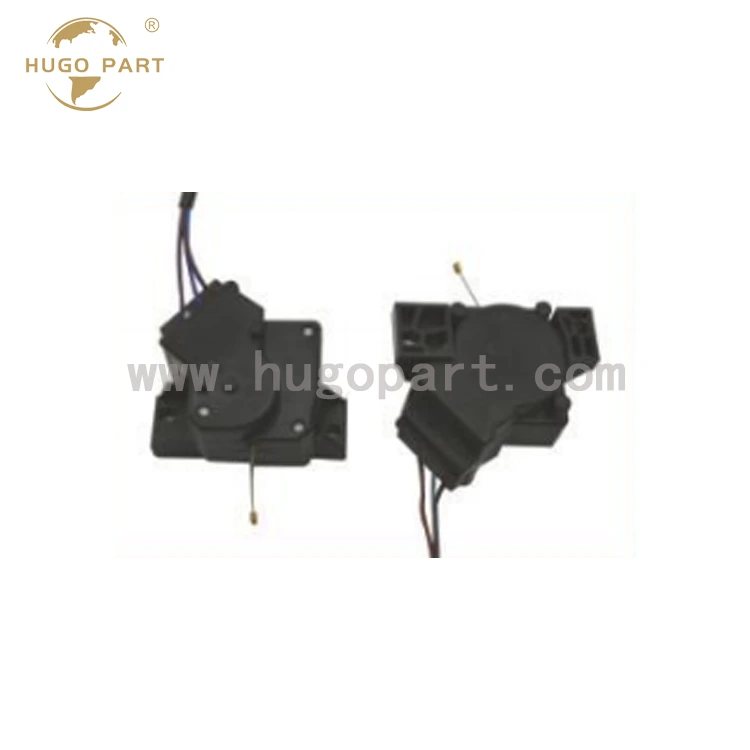
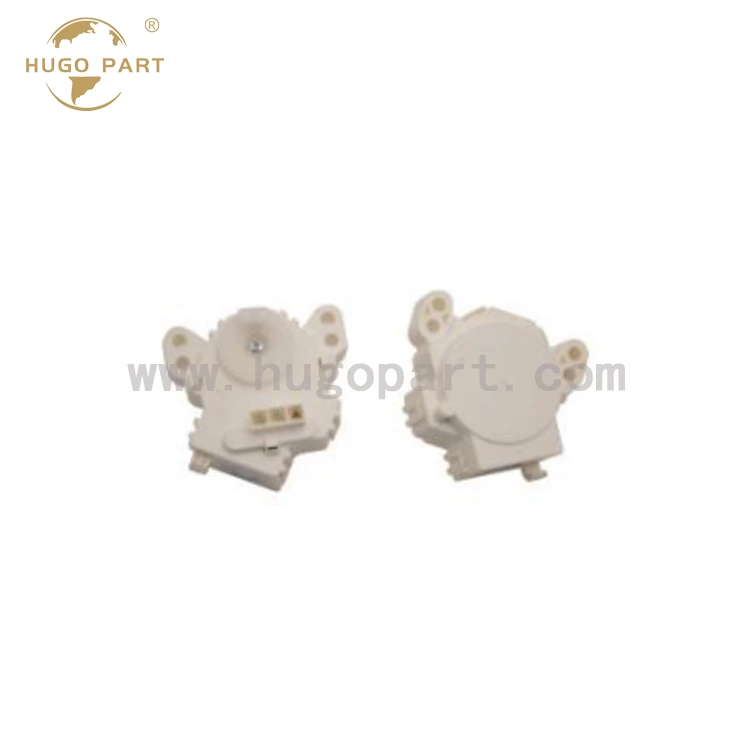
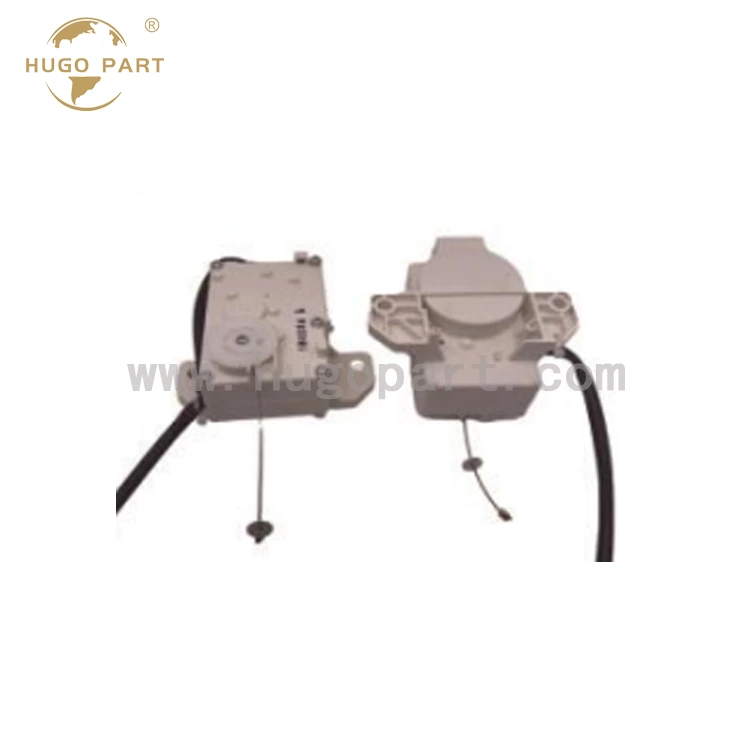
Hugo 2-Pin Washing Machine Drainage Puller is widely used in semi-automatic twin-tub and fully automatic washing machines as the electromechanical actuator that controls the drain valve. It is specifically designed to pull the linkage cable or arm when the control board energizes the 2-pin terminal, overcoming the valve spring to release wastewater, and to return to the sealed position once power is cut. There is a moisture-resistant plastic housing on the puller, combined with a metal gearset or plunger and a sealed coil, so that stable pull force, quiet operation, and long service life in damp cabinet conditions can be guaranteed.
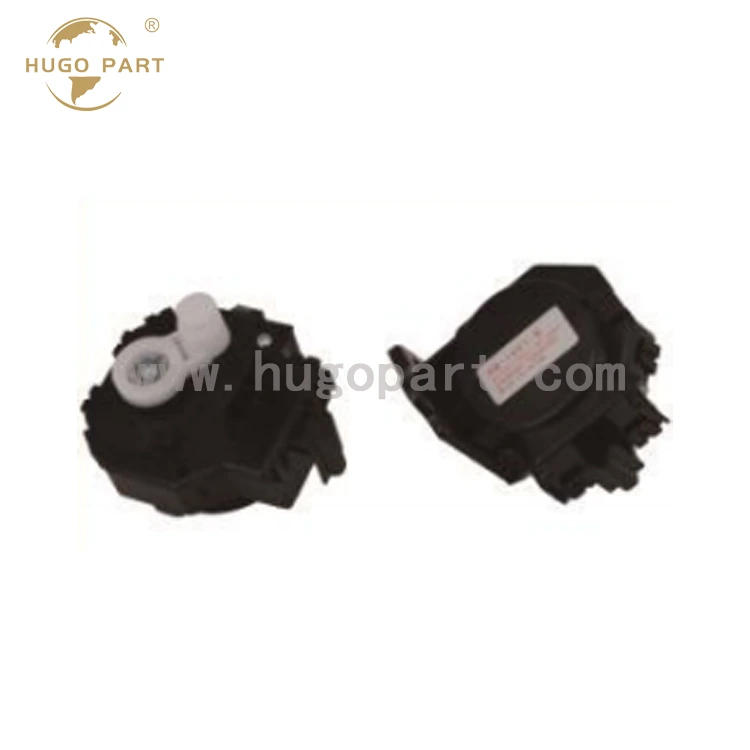
Standard 2-pin plug, directly connected to the original machine harness, without cutting wires, welding, or modifying the control board. The repairman can complete the replacement by removing the old parts and inserting the new ones, greatly reducing the maintenance time.
The internal motor or coil outputs stable traction force (commonly 25-55N level), which can reliably overcome the resistance of the drainage valve spring, quickly release water when opening the valve, and avoid the situation of "pulling halfway and not draining completely".
After power failure, rely on the force of the valve spring to return to its original position, and the traction rope/connecting rod returns to its initial position. The drainage valve is sealed in place, without dripping or returning water, to avoid water accumulation in the bucket after washing.
The shell is made of moisture-proof engineering plastic, and the internal coil is sealed. It can operate stably in a damp and vibrating environment at the bottom of the washing machine for a long time without short circuiting or rusting.
The transmission components are made of metal materials, which are wear-resistant and fatigue resistant. They can withstand tens of thousands of traction actions without the "buzzing noise" caused by plastic gear slippage or tooth wear.
The traction process is smooth, with no violent impact sound. Laundry at night does not disturb people and reduces the impact of vibration on surrounding pipelines.
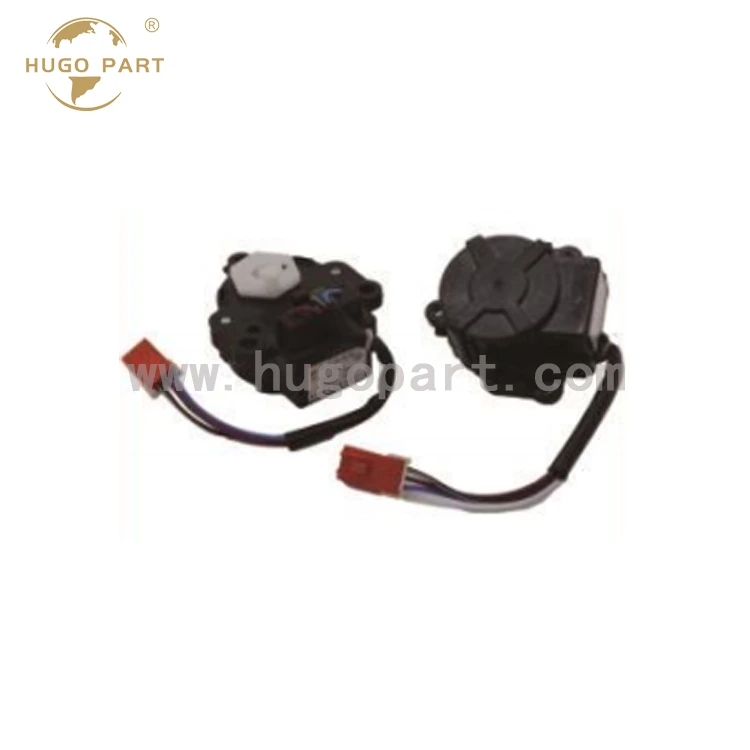
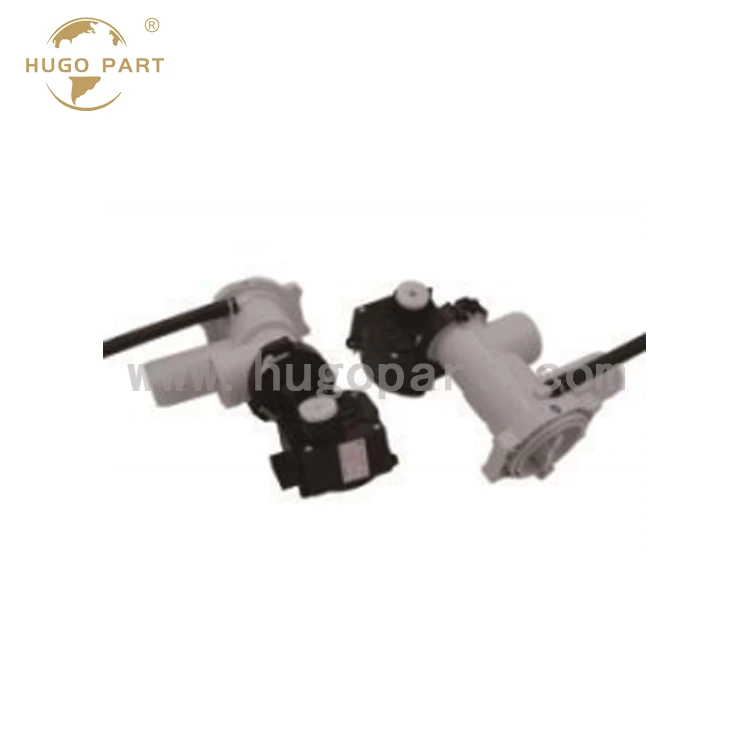
| Product name | 2-Pin Washing Machine Drainage Puller |
| Available specification | 2 inserts and other styles |
| Available colors | Customization is available upon request |
| Samples available | Small quantity samples can be provided; specific details are negotiable |
| MOQ (Minimum Order Quantity) | Negotiable |
| Warranty time | Generally 1 year, except for special cases |
| Packing method | Carton packaging; specific details are negotiable |
| Place of origin | Ningbo, China |
The 2-pin Washing Machine Drainage Puller works in a damp, vibrating, and wet environment at the bottom of the washing machine. Incorrect installation, rope jamming, and incorrect stroke can all lead to poor drainage or poorly closed valves. Pay attention to the following points during use:
Verify voltage and specifications: Confirm that the working voltage (commonly AC220V/DC12V, etc.), traction stroke, and tension level are consistent with the original machine. If the voltage does not match, the coil may burn or it may not move.
Check the plug and outlet direction: The form, spacing, and outlet direction of the 2-pin plug should match the original machine to avoid damaging the terminals or wiring harness due to hard insertion.
Check the traction rope/connecting rod: confirm that the length is appropriate, there are no knots or burrs, and the rope end buckle is intact.
Power off operation: Before replacement, be sure to unplug the power plug to prevent damage to the control board caused by live plugging and unplugging.
Secure fixation: The tractor is fixed in its original position with screws, and the housing is not tilted or suspended, avoiding overall displacement during traction and insufficient travel.
The traction rope runs straight: the rope/connecting rod follows the original path to avoid twisting, flattening, and friction with moving parts, reducing resistance.
Alignment of travel: The connection point between the traction rope and the swing arm of the drainage valve should be consistent with the original machine. If the travel is too long, it will damage the valve body, and if it is too short, the valve will not open enough and the drainage will be slow.
Insert the plug into place: After inserting, gently pull to confirm that the lock is in place, to avoid virtual connection causing the tractor to malfunction or intermittently operate.
Wire harness fixation: The cable is fixed along the original path with buckles, away from heating elements and moving parts.
Prevent foreign objects from blocking: Coins, buttons, and fluff accumulation inside the drainage valve can increase traction resistance, leading to improper pulling or motor overload. Regularly clean the debris at the valve port.
Avoid long-term power on: For some models, if the tractor is constantly hot or buzzing during drainage, check if the valve body is stuck to prevent the coil from overheating and burning out.
Pay attention to moisture prevention: Although the shell is moisture-proof, long-term water accumulation should be avoided at the plug terminals to prevent oxidation and poor contact of the terminals.
Do not forcefully pull the rope manually: Do not forcefully pull the rope during power-off maintenance to prevent damage to internal gears or plungers.
Fault diagnosis before replacement: When there is no drainage, buzzing noise, or a drainage fault code reported during mid stop, first test whether the terminal voltage has output, whether the manual rope valve can be opened, and determine whether it is a failure of the traction device or a stuck valve body or no output from the control board.
Do not use other voltages as substitutes: voltage mismatch will immediately burn out the coil and must be replaced according to the original specifications.
Comparison of old parts retention: Retain removed old parts for easy comparison of travel, wire direction, and plug form.
Same batch specifications: Ensure that the parameters of the same batch of tractors are consistent during batch repairs.
Store in a dry environment to avoid high temperatures and humidity
Avoid excessive bending and knotting of the traction rope
Stay away from strong magnetic fields and corrosive gases
Common manifestations: The washing machine does not drain or drains slowly after entering the drainage program; The tractor makes a buzzing sound but cannot be pulled; Shutdown during washing and report drainage fault code; The valve is not tightly closed after drainage, and there is continuous dripping or backflow in the bucket; Unable to start due to incomplete water drainage before dehydration. If the above situation occurs, first check whether the drainage valve is blocked by foreign objects and whether the traction rope has fallen off, and then measure the terminal voltage to determine whether the traction device has failed.
The direct current (DC) model has positive and negative poles, and reversing them can cause the traction device to reverse or not operate; The AC model has no polarity and can be plugged in freely. Before installation, it is necessary to confirm the original specifications and terminal definitions, plug in according to the original position, and gently pull to confirm that the lock is in place to avoid intermittent action caused by virtual connection.
Possible reasons: There are coins, buttons, and fluff stuck in the drainage valve, and the traction is insufficient to pull it open; The travel of the connection point between the traction rope and the valve swing arm is incorrect, and the valve opening is insufficient; Control board has no voltage output; The drainage pipe is bent or blocked. It is recommended to manually pull the rope to test whether the valve can be opened first, and then measure the terminal voltage to gradually investigate.
Mild fever is normal, but continuous burning and buzzing without movement are abnormal. It is often caused by the blockage of the drainage valve, which leads to long-term blockage of the tractor, overload of the coil, or voltage mismatch. The power should be immediately cut off to check if the valve body is blocked and if the traction rope is stuck, in order to avoid overheating and burning of the coil.
Address
Dongshantou Industrial Park, Guanhaiwei Town, Cixi City, Ningbo Province, Zhejiang Province, China