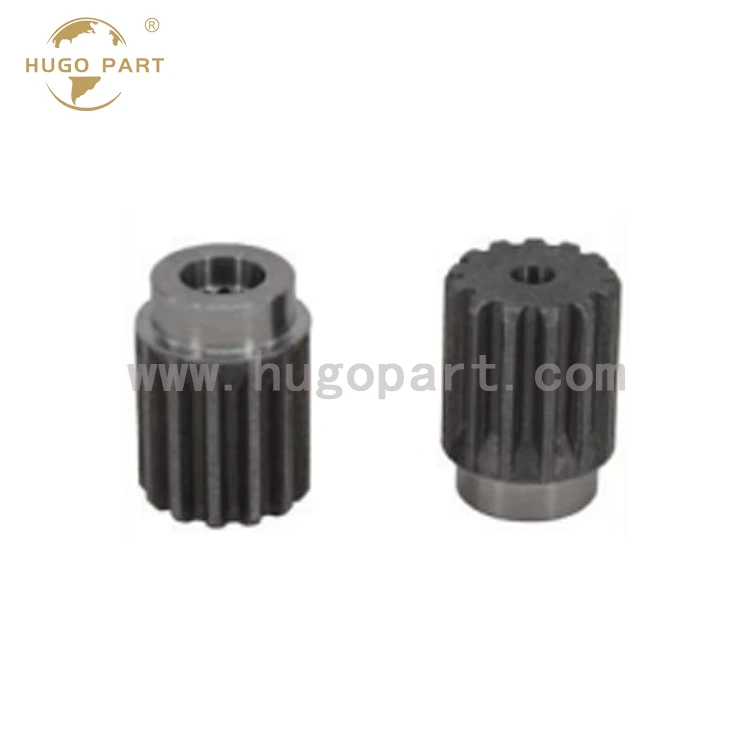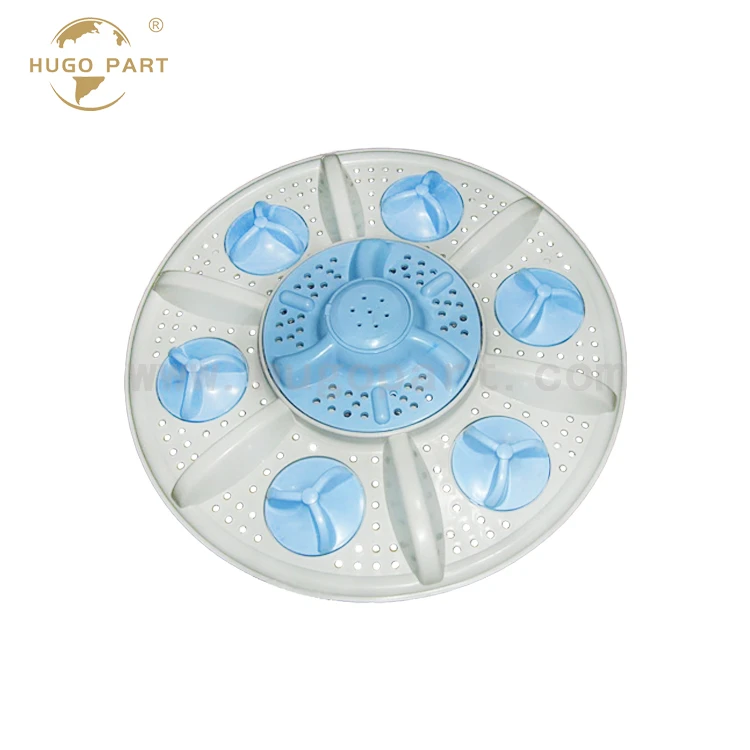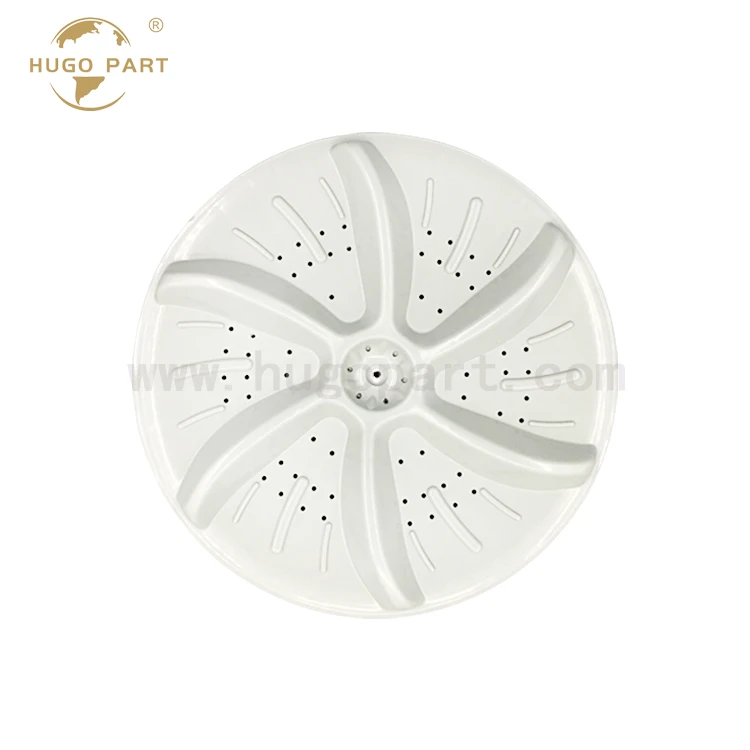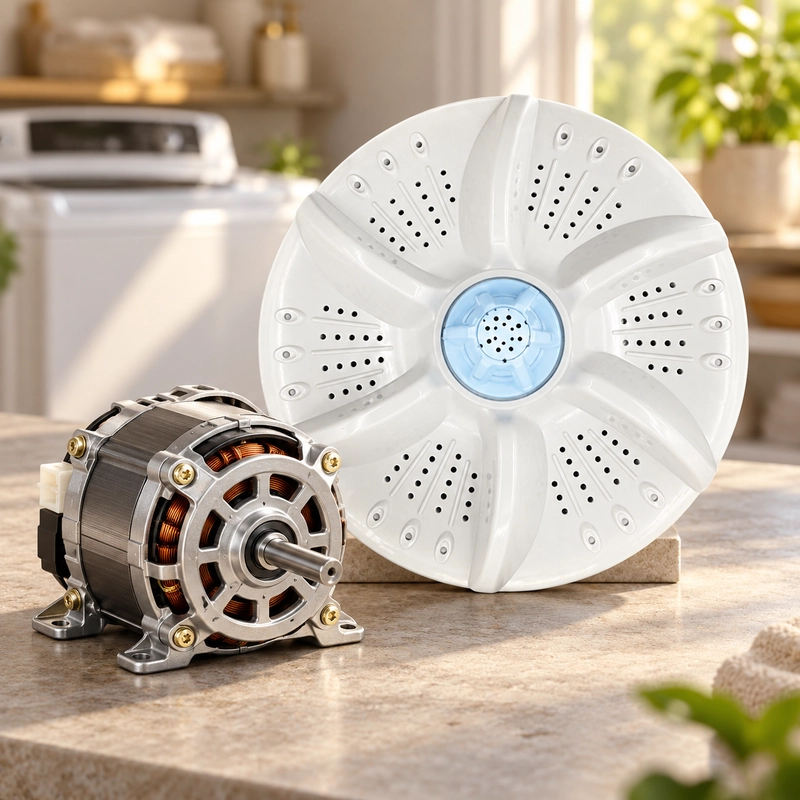
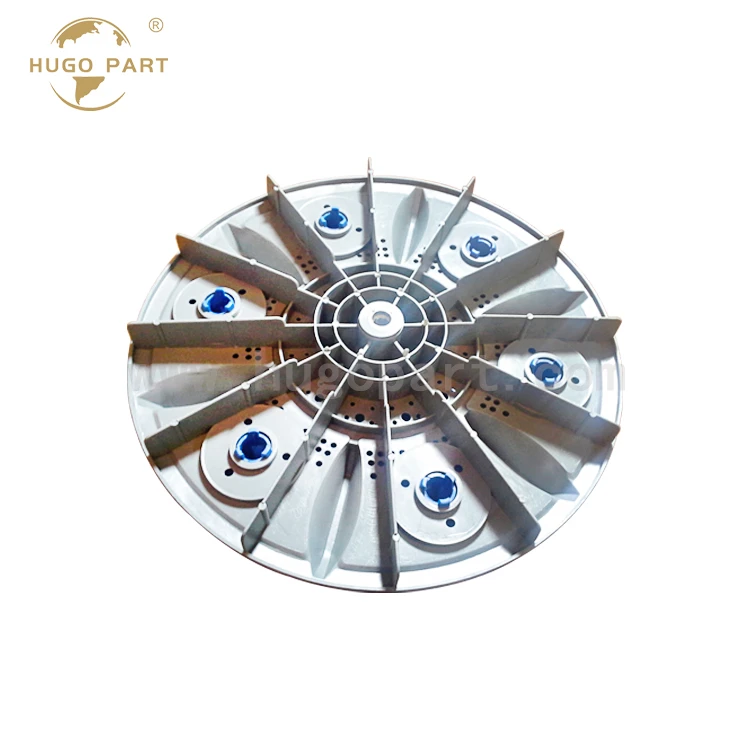
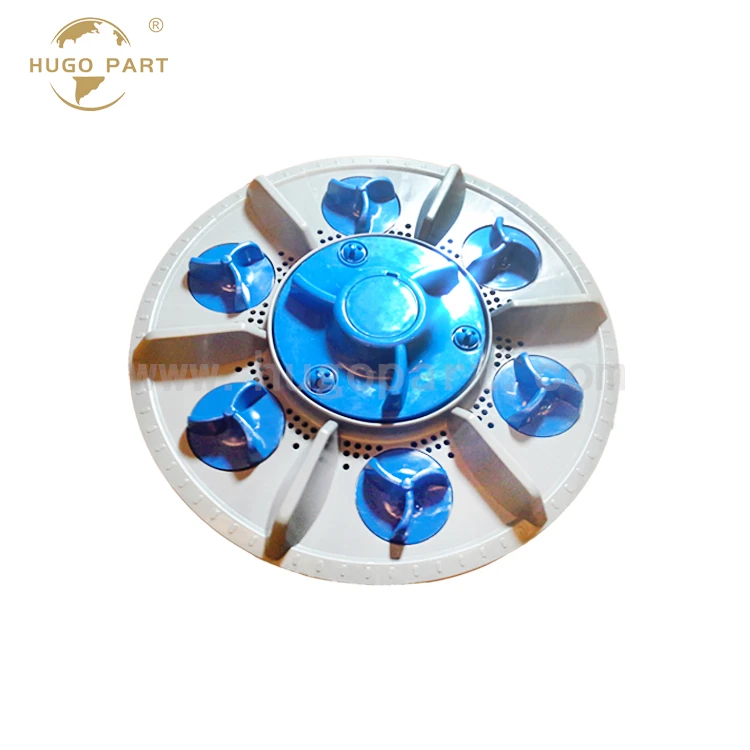
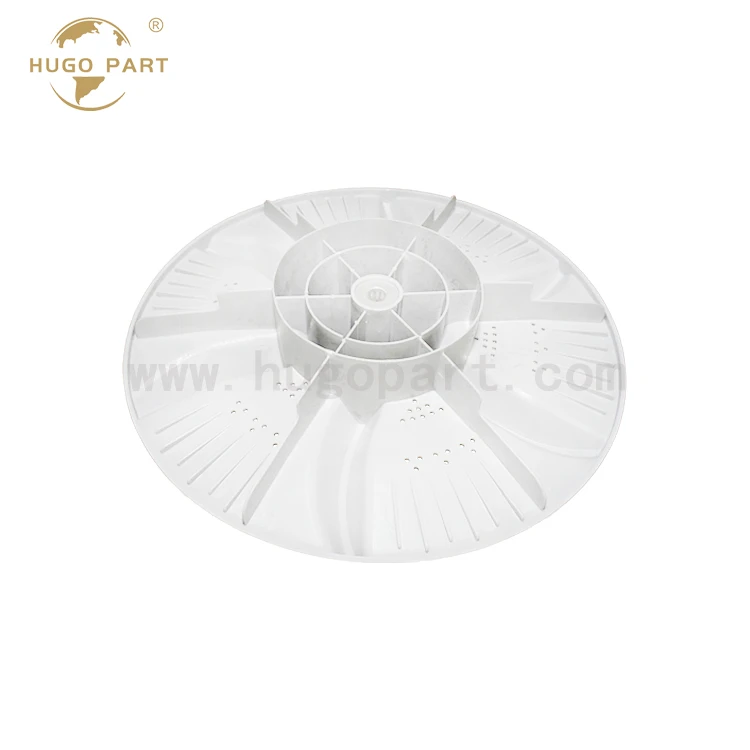
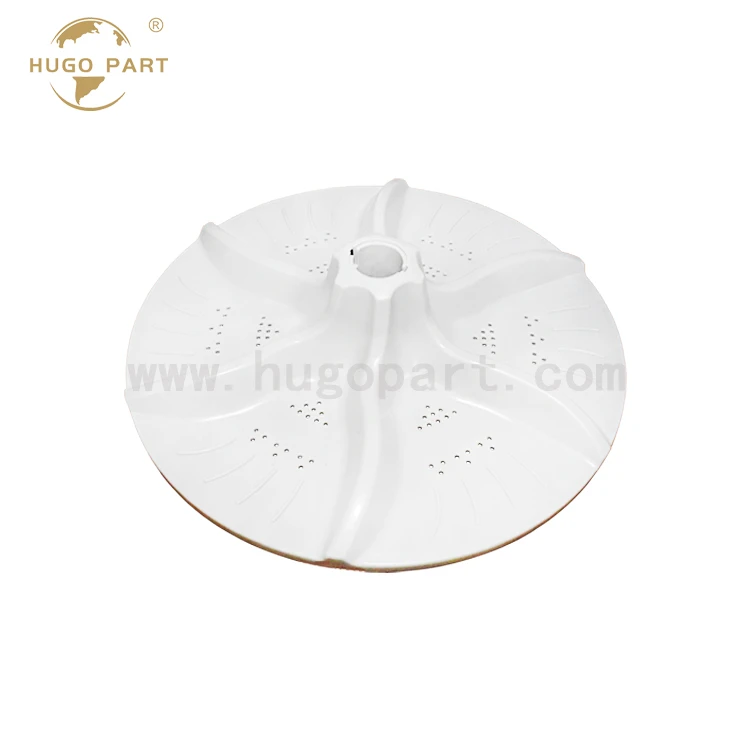
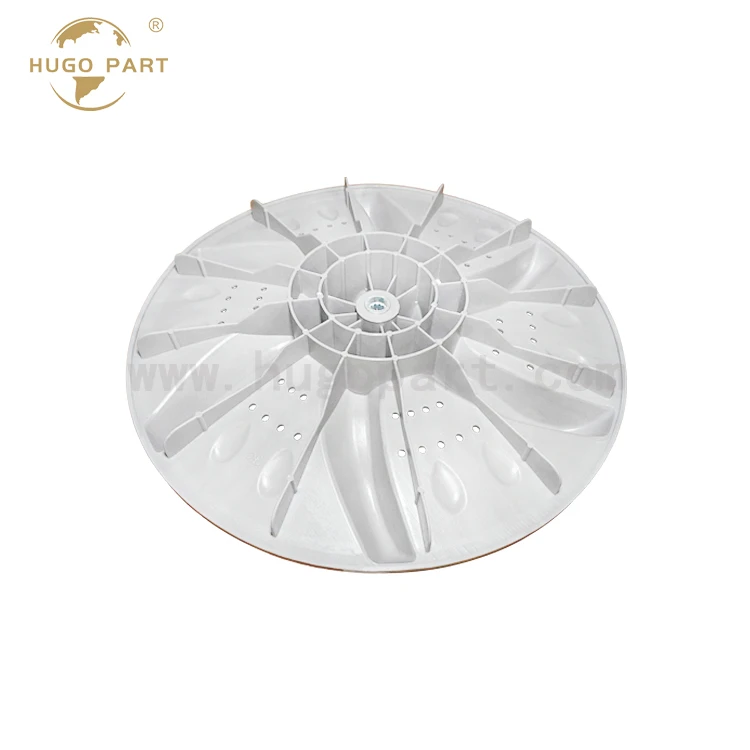
As a professional manufacturer, we are able to provide comprehensive customization services. Hugo high-quality 35-41cm 11-Tooth Washing Machine Pulsator is widely used in commercial, industrial, and large-capacity residential laundry equipment. It is specifically designed to accommodate extra-large washer tubs, ensuring seamless integration and reliable heavy-duty support. There is a dense ribbed understructure at the bottom of the pulsator for enhanced torque distribution, so that the entire component remains stable during extreme loads. No special tools are required to install the pulsator, and the installation method is convenient and simple with direct replacement. The biggest feature of the washing machine pulsator is its 11-tooth hub, and its diameter is adjustable/compatible within a range of 35cm-41cm for maximum water coverage.
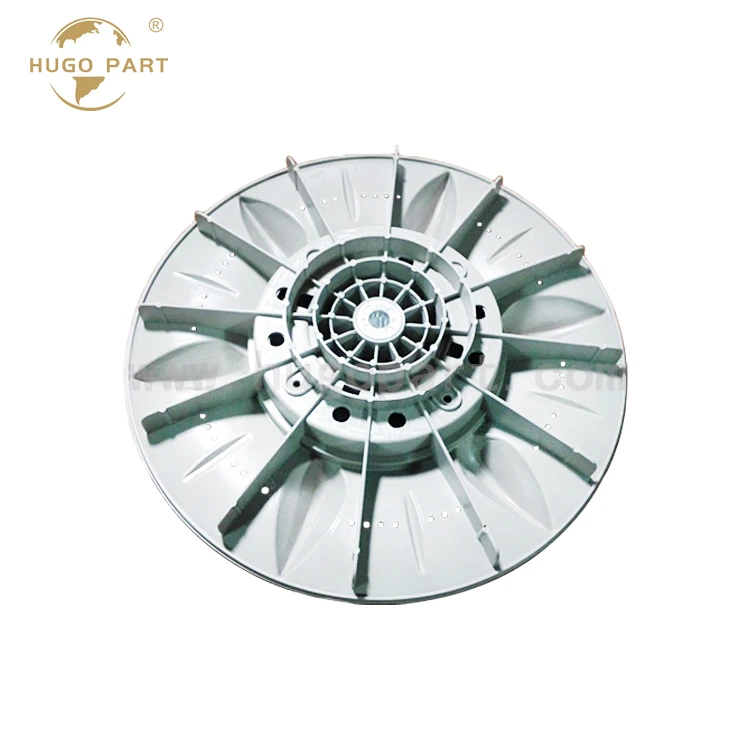
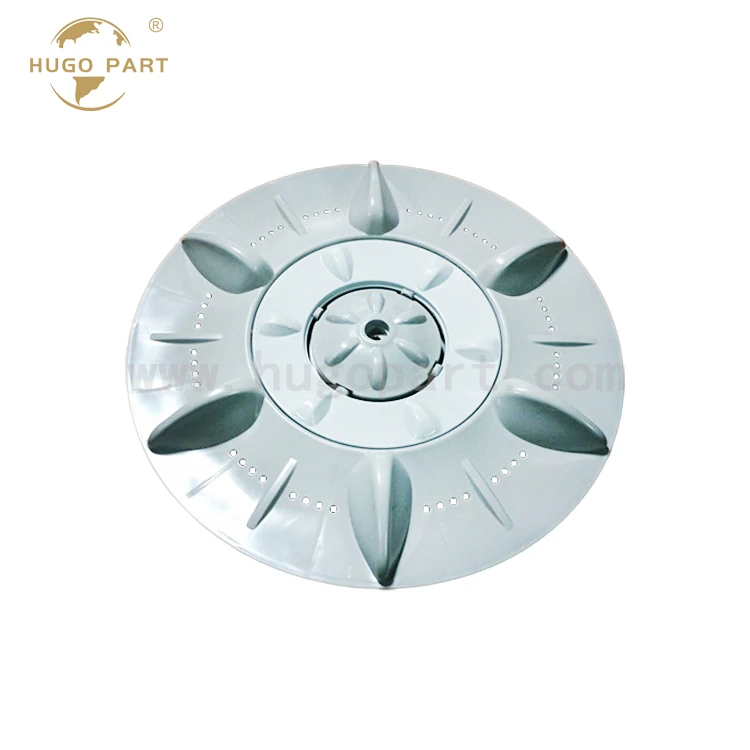
| Product name | 35-41cm 11-Tooth Washing Machine Pulsator |
| Available specification | 35-41cm 11-Tooth |
| Available colors | Customization is available upon request |
| Samples available | Small quantity samples can be provided; specific details are negotiable |
| MOQ (Minimum Order Quantity) | Negotiable |
| Warranty time | Generally 1 year, except for special cases |
| Packing method | Carton packaging; specific details are negotiable |
| Place of origin | Ningbo, China |
Choosing the right pulsator is the key to ensuring the washing effect and stable operation of large capacity washing machines. The size or number of teeth of the pulsator do not match, which can result in poor cleaning or damage to the reducer or even motor. Please confirm the selection according to the following steps:
Remove the old wave wheel and directly measure its maximum diameter. If the old part is damaged and cannot be measured, it can be calculated based on the diameter of the washing machine's inner tub: about 60-65 centimeters corresponds to a 35 centimeter pulsator, about 65-70 centimeters corresponds to a 38 centimeter pulsator, and about 70 centimeters or more corresponds to a 41 centimeter pulsator. A small diameter of the wave wheel can lead to insufficient water flow coverage and uneven washing; If it is too large, it may get stuck on the barrel wall or increase the motor load.
Count the number of spline teeth in the center of the old pulsator - whether it is 10 teeth or 11 teeth. The number of teeth is different, and the meshing method with the output end of the reducer is different, so it cannot be mixed. The 11 tooth spline has a larger contact area and more uniform force distribution, designed specifically for high torque and heavy load scenarios. If the old parts are severely worn and cannot be counted clearly, clear photos can be taken and sent to the Hugo technical team for assistance in judgment.
Confirm the inner diameter, tooth profile angle, and installation height of the center keyway of the pulsator to ensure complete matching with the output shaft of the reducer. At the same time, confirm the gap between the bottom of the pulsator and the bottom of the bucket. If the gap is too large, it may cause the pulsator to shake and make abnormal noises during washing, while if the gap is too small, it may cause friction with the bottom of the bucket and produce noise.
The Hugo 35-41cm eleven tooth wave wheel is designed specifically for large capacity commercial semi-automatic washing machines and large household models. The installation structure of the pulsator may vary among different brands and models with different capacities. Please provide Hugo customer service with the brand and model of the washing machine, the diameter of the inner tub, and photos of the old pulsator. We will confirm the compatibility within 30 minutes.
Professional tip: If the load intensity of the washing machine is high, the wear speed of the pulsator is faster than that of a household machine. It is recommended to check the condition of the impeller blades every six months. If obvious wear, cracking, or abnormal noise is found during operation, it should be replaced in a timely manner to avoid affecting the washing effect or damaging the reducer.
After unpacking, please first check whether the appearance of the pulsator is intact, whether the blades are damaged or deformed, and whether the center 11 tooth spline is complete without missing teeth. Flip the pulsator over and confirm that there are no burrs or foreign objects in the keyway hole. If any abnormalities are found, please contact customer service immediately for replacement and do not forcefully install.
Before installation, clean the installation position of the pulsator and the output shaft of the reducer of any debris, fluff, and residual detergent to ensure that the contact surface is clean. Align the pulsator with the spline shaft of the reducer, press it vertically into place, confirm that the spline is fully engaged, and then tighten the central screw. After installation, manually rotate the pulsator to confirm that it rotates smoothly and without any obstruction before powering on for testing.
Do not exceed the rated capacity of the washing machine for washing. Overloading can cause the pulsator and reducer to operate at high loads for a long time, accelerating wear and tear. When washing hard bottomed clothes with metal buckles, zippers, etc., it is recommended to flip them over or put them in a laundry bag to prevent hard objects from getting stuck at the bottom of the pulsator and damaging the blades or spline teeth.
Remove the pulsator every two to three months and clean the tangled hair, thread ends, buttons, and other debris at the bottom to prevent blockage of the water flow channel or jamming of the spline teeth, which may affect the transmission. When cleaning, rinse with clean water. Do not use steel wire balls or hard brushes to scratch the surface of the impeller to avoid damaging the smoothness of the blades. Do not use strong acids, strong alkalis, or organic solvents for cleaning to avoid corrosion of the material.
Check the wear of the impeller blades and whether the central spline teeth are loose every six months. If obvious wear and smoothness of the blades or abnormal noise and shaking occur during operation, please replace the new wave wheel in a timely manner to avoid affecting the washing effect or damaging the reducer.
11 teeth and 10 teeth refer to the number of spline teeth at the center of the pulley. The 11 tooth spline has a larger contact area and more uniform force distribution, designed specifically for commercial scenarios with high torque and heavy loads, and can withstand continuous operation for longer periods of time; 10 tooth splines are commonly found in conventional household high-capacity models. The two have different tooth shapes and tooth pitches, and cannot be used interchangeably. Forcefully installing can cause poor engagement, abnormal operation noise, and even damage to the output end of the reducer. When making a purchase, be sure to count the number of teeth in the center of the original machine's pulsator. If unsure, take a photo and send it to Hugo's technical team for confirmation.
The most accurate method is to remove the old wave wheel and directly measure its maximum diameter. If the old part is damaged, it can be calculated based on the diameter of the washing machine's inner bucket. Simultaneously confirm whether the tooth profile and size of the center 11 tooth spline match. Send photos of the old pulsator or the size of the inner bucket to Hugo customer service, and we will confirm the compatible specifications within 30 minutes.
The Hugo 35-41cm eleven tooth wave wheel is designed specifically for commercial high-intensity scenarios. The dense mesh reinforcement at the bottom evenly distributes high torque stress throughout the entire chassis, ensuring long-term high load operation without deformation or warping. Under normal intensity, the service life can reach 3-5 years, which is more than twice as long as ordinary pulsars.
There are usually several reasons for abnormal noise after installation: firstly, the spline teeth are not fully engaged, and the pulsator is not pressed in place. Reinstall to ensure proper engagement; The second issue is that the central fixing screw is not tightened, so it can be re tightened; The third issue is that the gap between the bottom of the pulsator and the bottom of the bucket is too small, causing friction. Check if there are any foreign objects stuck or if the pulsator is deformed; The fourth issue is that the reducer itself has a malfunction and needs to be repaired separately. If there is still abnormal noise after excluding the above reasons, please contact the Hugo technical team for assistance in troubleshooting.
Address
Dongshantou Industrial Park, Guanhaiwei Town, Cixi City, Ningbo Province, Zhejiang Province, China