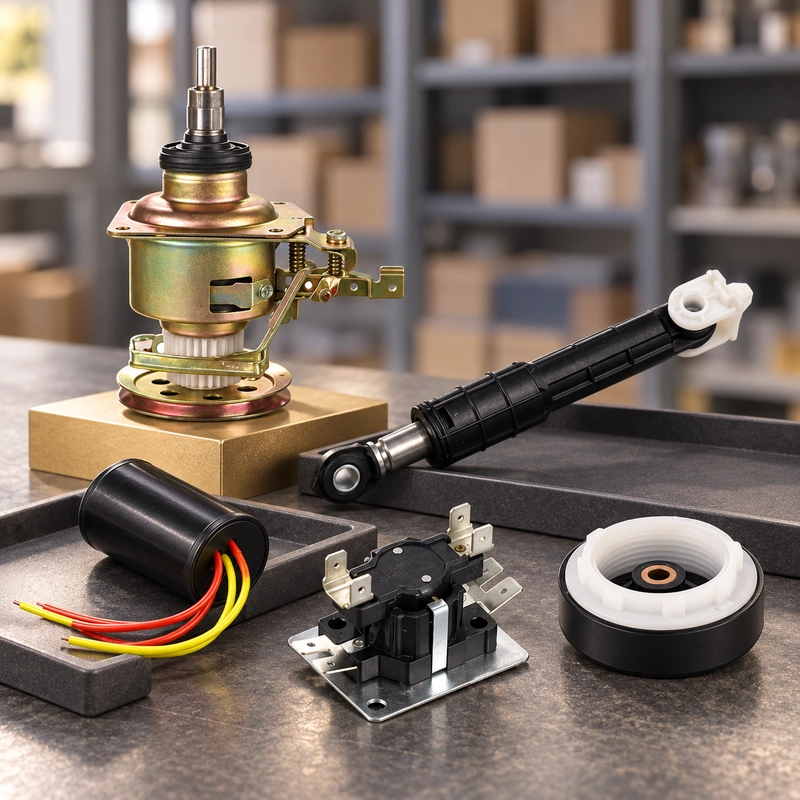
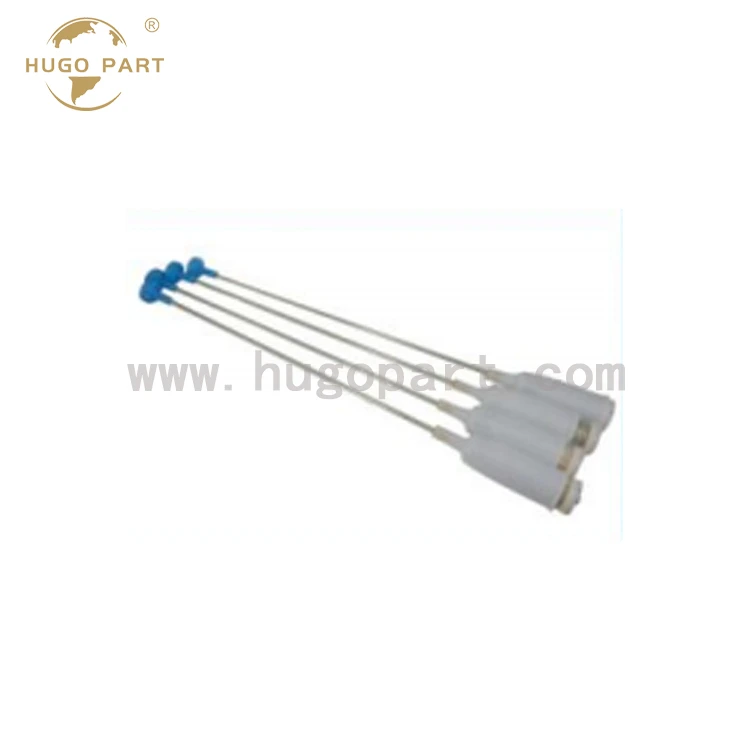
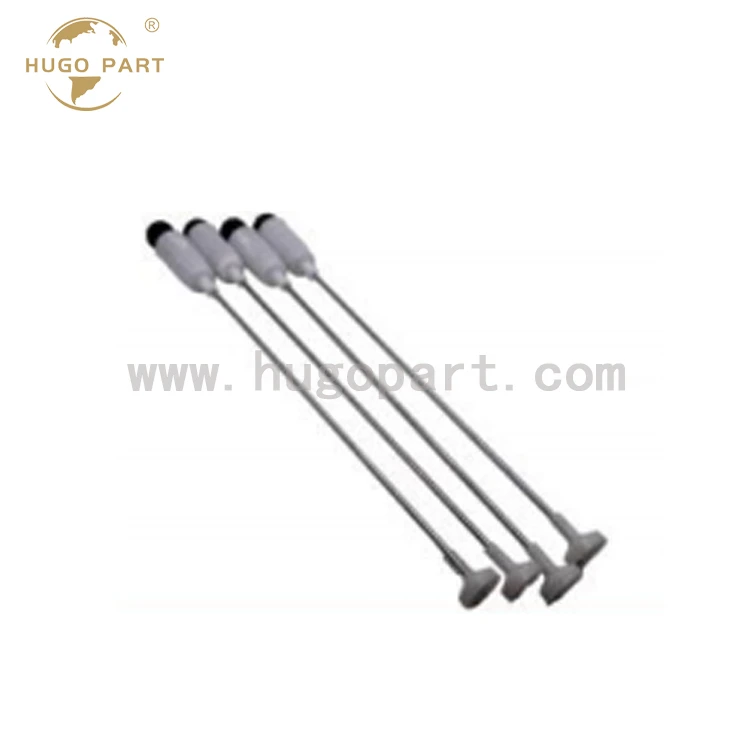
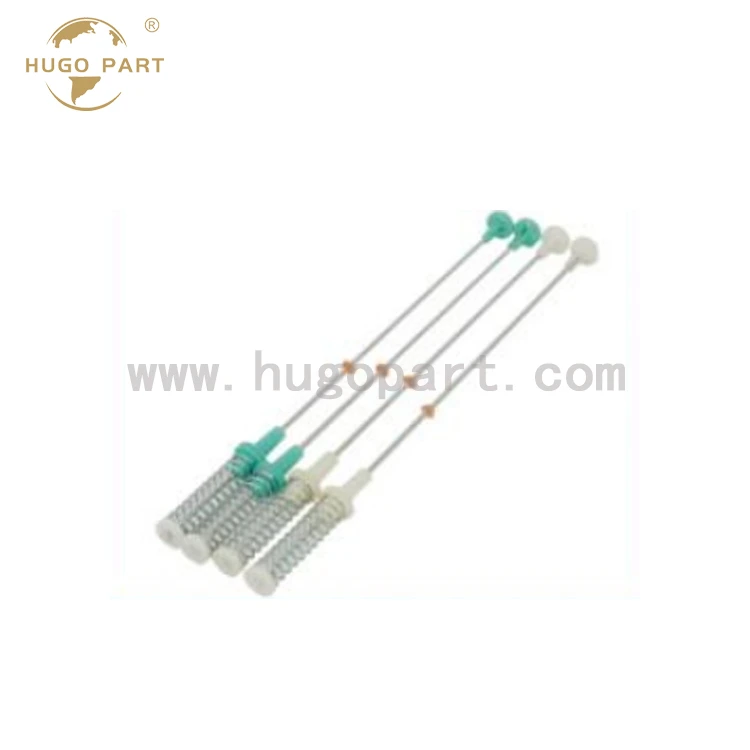
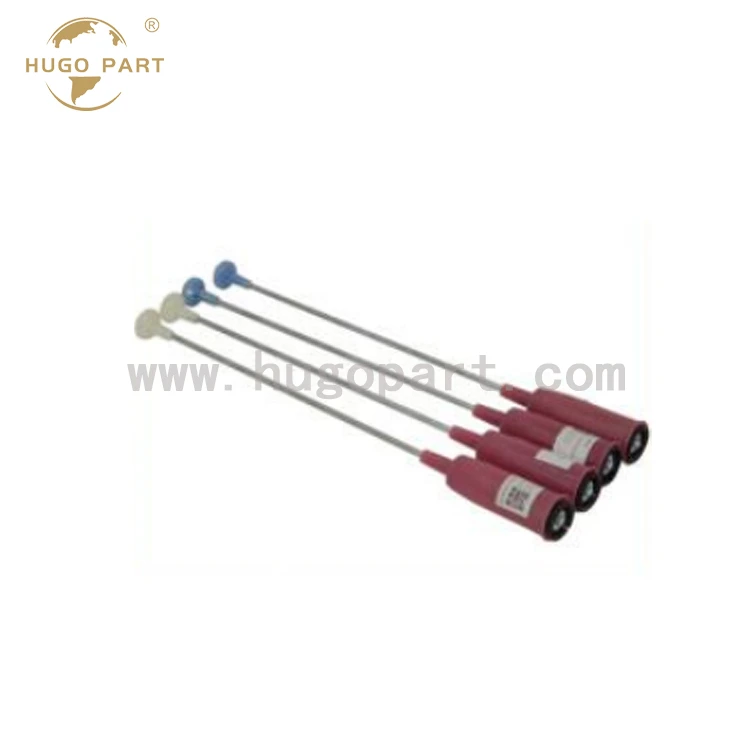
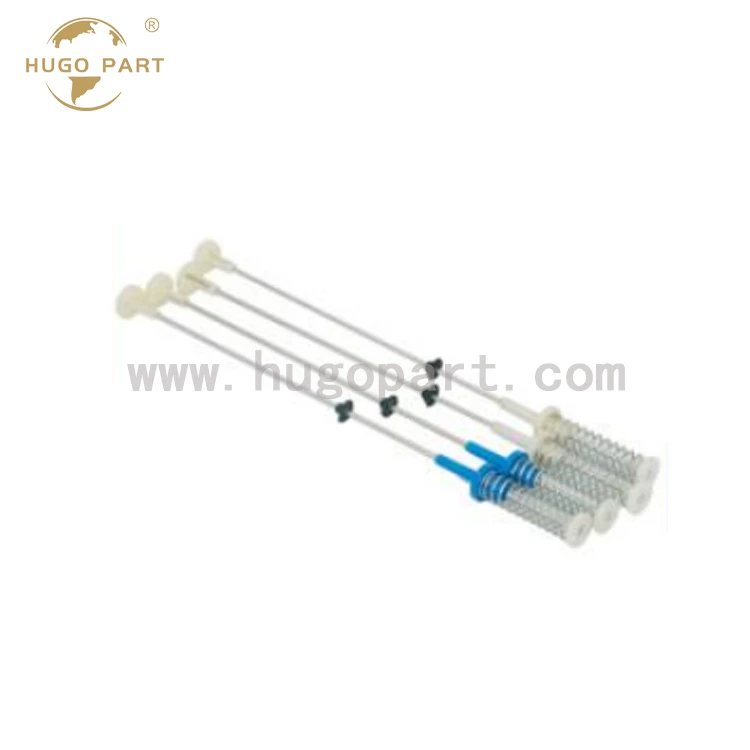
As a professional manufacturer, we are able to provide comprehensive customization services. Hugo 48-72cm Washing Machine Suspension Rod is widely used in semi-automatic twin-tub and top-load washing machines as a tub-supporting damper assembly. It is specifically designed to hang from the cabinet corners and connect to the wash/spin tub through spring-loaded ball-end hooks, ensuring the inner tub stays centered and stable during wash and high-speed spin cycles. There is a tension spring combined with a friction damping sleeve and rubber bushing on the rod, so that vertical bounce and side swing can be absorbed and settled quickly.
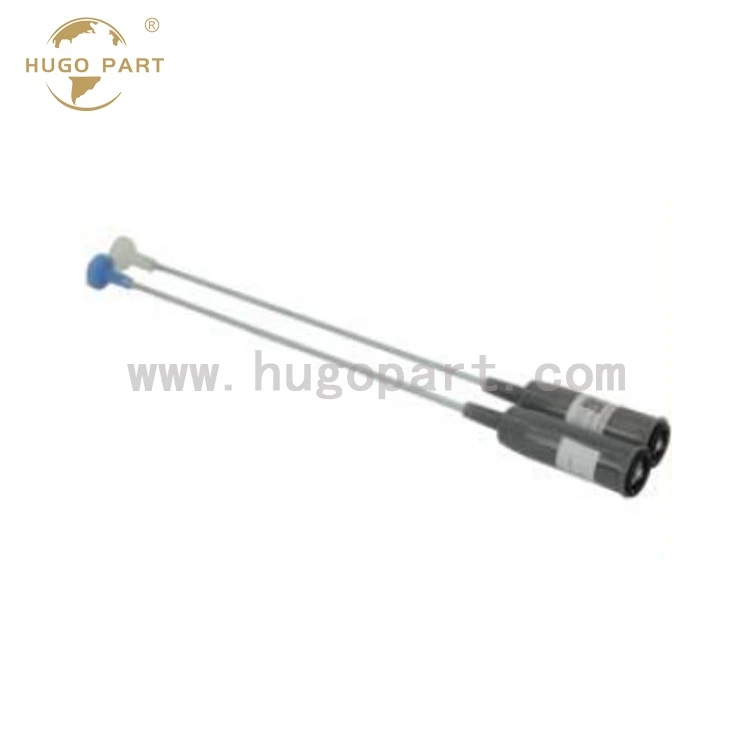
| Product name | 48-72cm Washing Machine Suspension Rod |
| Available specification | 48-72cm |
| Available colors | Customization is available upon request |
| Samples available | Small quantity samples can be provided; specific details are negotiable |
| MOQ (Minimum Order Quantity) | Negotiable |
| Warranty time | Generally 1 year, except for special cases |
| Packing method | Carton packaging; specific details are negotiable |
| Place of origin | Ningbo, China |
The 48-72cm Washing Machine Suspension Rod (also known as a suspension spring rod, bucket support rod, or suspension rod) is a vertical damper assembly used to support the inner washing/rotating bucket in semi-automatic double bucket or top loading washing machines. It connects the top cabinet corner to the bottom bathtub lug, uses tension springs to support the weight of the bathtub, and uses friction damping sleeves to absorb vibrations.
| Component | Effect |
| spring | Supporting the weight of the bucket and providing elastic cushioning |
| Damping sleeve/friction plate | Absorb up and down bouncing and left and right swinging, quickly stabilize the barrel body |
| Rod body | Connect the upper and lower ends to transmit force |
| Ball head hook/buckle | Upper hanging box corner seat, lower hook bucket body lifting ear |
After the inner bucket is filled with clothes and water, it weighs a lot. The suspension rod spring "hangs" the bucket at the four corners of the machine body, making the bucket suspended in the center of the box.
During dehydration, the high-speed rotation of the inner bucket causes severe shaking, and the spring expands and buffers the vertical jumping. The damping sleeve friction consumes the horizontal swing energy, allowing the bucket body to quickly restore stability.
If the suspension rod ages and fails, the inner bucket will shake left and right, jump up and down wildly, make a "thump" sound when hitting the box, and even move the whole machine and dance. A good suspension rod keeps the barrel centered and does not collide with the box.
Damping structures convert vibration energy into thermal energy and reduce metal collision and resonance noise.
During dehydration, the body shakes violently, sways left and right, and even shifts
The inner bucket hits the box and makes a "thump" sound
The bucket body is significantly tilted and cannot return to the center position
Upon dismantling, it was found that the spring was broken, the damping sleeve was worn, and the rod body was bent and deformed
The machine has been used for many years, and the elasticity of the suspension rod has significantly decreased
48-72cm refers to the effective length range of the suspension rod (distance between the upper and lower installation points), and different capacity models are equipped with different lengths:
48-55cm: Small capacity dual cylinder engine
55-65cm: Medium capacity mainstream models
65-72cm: Large capacity model
Measure the length of the old pole and confirm the hook form at both ends when making a purchase.
The suspension rod cannot be hung just by its length. If any of the length, hook, damping, or spring force is incorrect, it will still collide, shift, or make abnormal noises when installed. Choose from the following five steps:
Remove the old suspension rod and measure the straight-line distance from the force point of the upper hook to the center of the lower hook/base using a tape measure in a natural sagging state:
48-55cm: Small capacity dual cylinder, mini model
55-65cm: mainstream medium capacity dual cylinder/pulsator
65-72cm: Large capacity models, high barrel machines
The recommended deviation from the center distance is ≤ 1cm. If the deviation is too large, it may not be hung properly or the bucket may be pulled askew.
Upper end: straight hook/curved hook/double hook/ball head buckle (depending on the position of the box corner seat hole)
Lower end: circular hole/square groove/plastic base/metal lifting ear (depending on the lifting point of the barrel)
The bending angle of the hook and the depth of the base slot must be consistent with the original machine, and cannot be installed just by looking like it
Take three photos and send them to us: overall side view (with ruler), close-up of the upper hook, and downward view of the lower base.
Single damping sleeve: commonly used in small capacity machines, with low cost
Double damping sleeve: large capacity machine, high dehydration speed, more stable shock absorption
Damping sleeve hardness (Shore A) increases with capacity: small capacity tends to be softer, large capacity tends to be harder
Installing the wrong type can result in "prolonged dehydration shock" or "slow return and dragging sensation".
Spring wire diameter: small capacity about 2.0-2.2mm, large capacity 2.8-3.2mm
The number of coils and preload force of the four springs must be consistent
Replace all four of them together on the same machine, don't just replace the one that's damaged - the difference in damping between the old and new can cause uneven loading, barrel misalignment, and accelerated fatigue of the new rod
Damage to the 48-72cm Washing Machine Suspension Rod is usually manifested as severe shaking, swaying or even shifting "dancing" of the machine body during dehydration, "thumping" sound from the inner bucket hitting the box body, obvious tilting of the bucket body and inability to return to the center position, and continuous abnormal noise during operation. If the above situation occurs, it is recommended to dismantle the machine and check whether the suspension rod spring is broken, whether the damping sleeve is worn, and whether the rod body is bent or deformed. In addition, long-term high load use or moisture exposure of the suspension rod can accelerate aging, and regular inspections can detect potential hazards in advance.
48-72cm refers to the effective length range of the suspension rod (the straight-line distance from the force point of the upper hook to the center of the lower base). Before making a purchase, remove the old suspension rod and use a tape measure to measure the center distance between the hanging points at both ends in a naturally hanging state, confirming that it is within the range of 48-72cm. Simultaneously confirm the upper hook form (straight hook/curved hook/ball head) and the lower base structure (round hole/square groove/plastic seat), send the old part photos or dimensions to Hugo customer service, and confirm the compatibility within 30 minutes.
The Hugo suspension rod adopts a thickened rod body, thickened damping sleeve, and tightly wound spring, with a normal service life of 8-10 years under normal operating conditions. But the following situations can accelerate damage: long-term overloading and washing can cause spring fatigue, high dehydration speed can cause overheating and wear of damping sleeves, uneven body can cause excessive force on a single component, and humid environment can cause rusting of the rod body. Proper use and regular inspection can significantly extend the service life.
Address
Dongshantou Industrial Park, Guanhaiwei Town, Cixi City, Ningbo Province, Zhejiang Province, China